



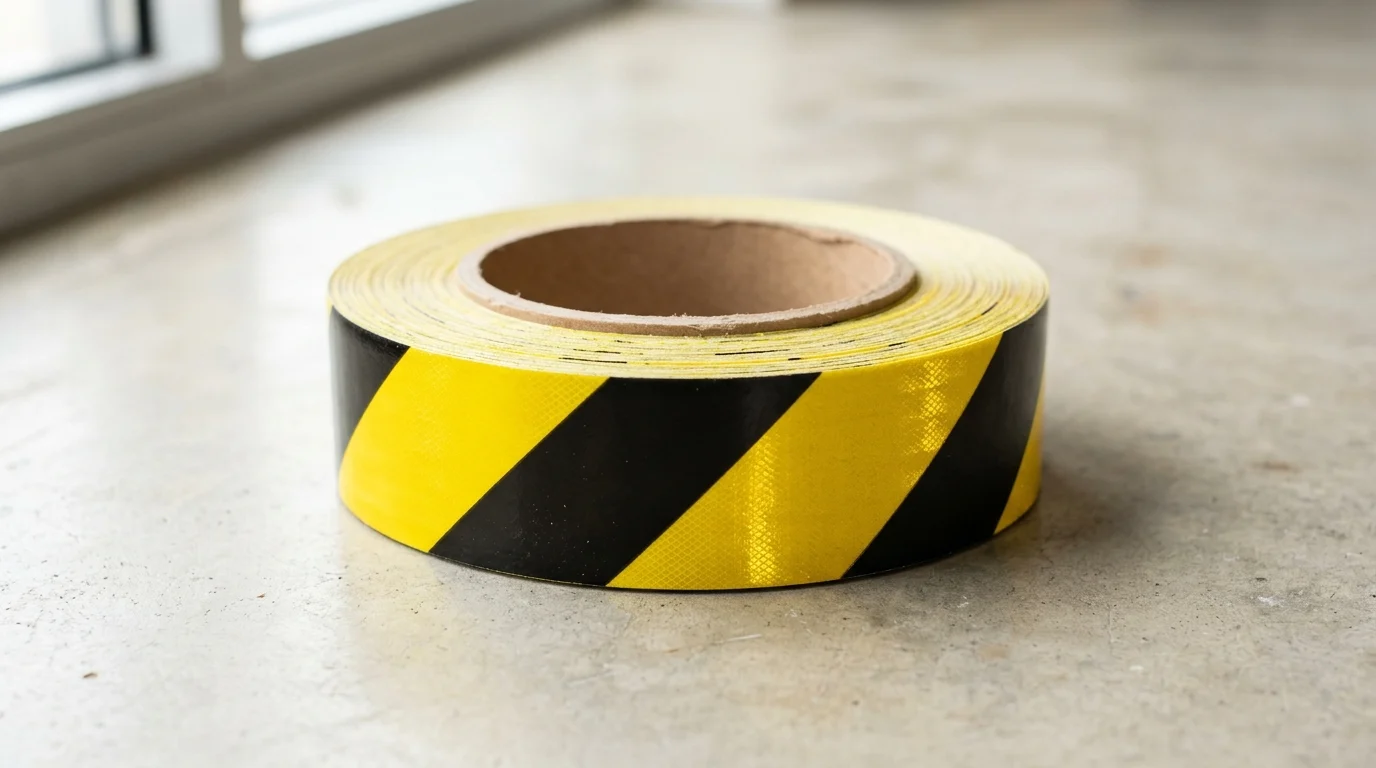
Introduction
In low-light, roadside, and industrial settings, visibility is not just a safety feature but a compliance requirement, and reflective tape is one of the components that determines whether PPE meets that threshold. Its performance affects how quickly workers are seen, how well garments satisfy regulated visibility classes, and whether employers can meet industry safety obligations. This article explains why reflective tape matters in PPE standards, how its retroreflective properties support real-world hazard prevention, and what technical and regulatory factors should guide material selection before PPE is approved for use.
Why Reflective Tape Matters for PPE Compliance
High-visibility personal protective equipment (PPE) serves as the primary line of defense for personnel operating in hazardous, low-light, or high-traffic environments. At the core of this protective function is reflective tape, a specialized material designed to bounce light back to its source, thereby alerting drivers and equipment operators to a worker’s presence. Selecting the correct reflective material is not merely a matter of visual enhancement; it is a strict regulatory requirement that dictates market access and workplace safety compliance.
How reflective tape improves visibility and safety
Reflective tape relies on the principle of retroreflection, achieved through either exposed glass bead technology or micro-prismatic structures. When a light source, such as a vehicle headlamp, strikes the tape, these microscopic elements redirect the light precisely back toward the observer. To meet baseline safety metrics, high-performance tapes must achieve a minimum coefficient of retroreflection (RA) of 330 cd/(lx·m²). This specific photometric threshold ensures that the wearer remains visible at distances exceeding 150 meters, providing vehicle operators with critical reaction time to prevent collisions in low-light conditions.
Why regulated industries require compliant reflective tape
Regulated industries, including construction, petrochemicals, and transportation, are bound by stringent occupational safety mandates that penalize the use of non-compliant PPE. The failure to equip workers with certified high-visibility garments can result in catastrophic liability and severe financial penalties, with regulatory fines often exceeding $14,500 per violation in North American jurisdictions. By adhering to global safety frameworks established by bodies such as the International Organization for Standardization, organizations mitigate legal risks, reduce workplace accident rates, and ensure uninterrupted operational continuity.
Technical Standards for Reflective Tape

Navigating the complex landscape of PPE compliance requires a thorough understanding of the technical standards governing high-visibility materials. These specifications dictate everything from the tape’s physical dimensions to its photometric longevity under harsh environmental conditions.
Which PPE standards and test methods apply
The two most prominent global standards dictating reflective tape performance are EN ISO 20471 in Europe and ANSI/ISEA 107 in the United States. Both frameworks mandate specific testing protocols to evaluate retroreflectivity, colorfastness, and physical durability. For a garment to achieve Class 2 or Class 3 certification under these standards, the reflective tape must feature a minimum continuous width of 50 mm. Test methods involve exposing the material to extreme temperature fluctuations, abrasion, and flexing to simulate rigorous jobsite conditions.
How performance requirements affect compliance
Performance requirements directly dictate the lifecycle and compliance status of the final garment. A critical metric is wash durability. While standard reflective tape may be certified to retain its photometric properties for 25 domestic wash cycles, industrial-grade tapes must endure 50 to 100 industrial laundering cycles at temperatures up to 60°C or 75°C. If a reflective tape degrades below the mandatory 100 cd/(lx·m²) threshold after laundering, the entire garment is rendered non-compliant, forcing premature replacement and inflating procurement costs.
How to compare reflective tape specifications
Comparing reflective tape specifications requires analyzing the intersection of photometric performance, durability, and physical dimensions. Procurement teams must evaluate these variables to ensure alignment with regional regulations.
| Standard / Metric | Minimum Tape Width | Initial Retroreflectivity (RA) | Typical Wash Durability Requirement |
|---|---|---|---|
| EN ISO 20471 | 50 mm | > 330 cd/(lx·m²) | 50 cycles @ 60°C (Domestic) |
| ANSI/ISEA 107 | 50 mm (2 inches) | > 330 cd/(lx·m²) | 25-50 cycles @ 60°C |
| AS/NZS 4602.1 | 50 mm | > 330 cd/(lx·m²) | 30 cycles @ 60°C |
| NFPA 2112 (FR) | 50 mm | > 330 cd/(lx·m²) | 100 cycles @ industrial temps |
How to Evaluate Reflective Tape for End Use
Selecting the optimal reflective tape extends beyond verifying laboratory certifications; it requires a deep assessment of the end-use environment. Factors such as chemical exposure, thermal hazards, and the base fabric of the garment heavily influence the appropriate material choice.
How jobsite hazards and garment types affect selection
The specific hazards of a jobsite dictate the chemical and physical composition of the reflective tape. In the oil, gas, and electrical utility sectors, workers face flash fire and arc flash hazards, necessitating Flame Retardant (FR) reflective tapes. These specialized tapes must meet rigorous thermal standards, such as exhibiting an afterflame time of less than 2.0 seconds and showing no signs of melting or dripping when exposed to direct flame. Conversely, for highly mobile roles requiring stretchable garments, segmented or elastomeric reflective tapes are selected to prevent restriction of movement and to maintain a minimum of 15% elongation without cracking.
How application methods and durability differ
Reflective tape is typically integrated into garments via sew-on or heat-transfer application methods, each offering distinct durability profiles. Sew-on tapes utilize a durable fabric backing (often a polyester/cotton blend or aramid for FR applications) and provide superior longevity in heavy-duty environments. Heat-transfer tapes, which bond directly to the garment fibers, offer a lighter, more flexible finish but require precise application parameters. A typical heat-transfer process demands a press temperature of 150°C to 160°C, applied for exactly 15 seconds under 3 bar of pressure, to prevent premature delamination during laundering.
What trade-offs buyers should consider
Buyers must navigate several trade-offs when specifying reflective materials, primarily balancing upfront costs against lifecycle longevity. Premium FR-rated reflective tapes or those certified for 100+ industrial wash cycles typically command a 30% to 50% cost premium per meter compared to standard domestic-wash polyester tapes. However, specifying a cheaper tape for an industrial environment invariably leads to rapid photometric degradation, forcing the entire garment out of compliance and ultimately resulting in a higher total cost of ownership.
How to Reduce Compliance Failures in Sourcing
Sourcing high-quality reflective tape involves mitigating risks associated with manufacturing inconsistencies, counterfeit certifications, and global supply chain disruptions. Establishing robust quality assurance protocols is essential to prevent costly compliance failures.
How to verify certifications and product consistency
Verifying certifications requires buyers to demand current, third-party laboratory reports from accredited testing facilities rather than relying solely on supplier declarations. Procurement teams must enforce batch-to-batch consistency checks to ensure ongoing compliance. A critical quality control metric is requiring a photometric performance variance of less than 5% across different production lots. Independent spot-testing of inbound shipments guarantees that the retroreflectivity remains consistently above the 330 cd/(lx·m²) baseline.
How to improve attachment quality and traceability
Even the highest-grade reflective tape will fail if improperly attached to the garment. To ensure attachment quality, manufacturing specifications must dictate precise stitching parameters. Sew-on tapes should be stitched exactly 2 mm to 3 mm from the edge, utilizing 4 to 5 stitches per centimeter. This density prevents edge fraying without perforating the tape excessively, which can degrade its structural integrity. Furthermore, implementing batch-level QR codes or stamped lot numbers on the tape backing ensures 100% traceability from the raw material supplier to the final end-user.
How regional rules and supply risks affect sourcing
Global sourcing introduces logistical complexities and regional regulatory variations that impact inventory management. Minimum Order Quantities (MOQs) for specialized reflective tapes typically range from 1,000 to 5,000 meters, requiring accurate demand forecasting to avoid production bottlenecks. Additionally, navigating international trade frameworks, such as those monitored by the World Trade Organization, is necessary to anticipate tariff fluctuations and export restrictions that could disrupt the supply of critical PPE materials. Diversifying suppliers across different geographic regions mitigates these supply chain risks.
Decision Priorities When Choosing Reflective Tape
Establishing a standardized procurement framework is the final step in ensuring reflective tape compliance. A structured approach guarantees that all technical, environmental, and regulatory variables are accounted for before bulk manufacturing commences.
What to include in a specification checklist
A comprehensive specification checklist safeguards against procurement errors and aligns supplier deliverables with organizational safety mandates. Buyers should utilize a priority matrix to evaluate prospective reflective tape suppliers based on quantifiable metrics.
| Specification Parameter | Target Metric / Requirement | Verification Method |
|---|---|---|
| Retroreflectivity ($R_A$) | > 330 cd/(lx·m²) initial | Third-party ISO 17025 lab report |
| Wash Durability | Minimum 50 cycles @ 60°C | Physical laundering test data |
| Flame Resistance (if req) | < 2.0s afterflame, no melt/drip | NFPA 2112 / EN 469 certificate |
| Attachment Method | Sew-on (4-5 stitches/cm) or Heat-press | Garment prototyping & QA inspection |
| Traceability | 100% lot tracking | Backing stamps or supply chain audits |
Key Takeaways
- The most important conclusions and rationale for Reflective Tape
- Specs, compliance, and risk checks worth validating before you commit
- Practical next steps and caveats readers can apply immediately
Frequently Asked Questions
Which standards should reflective tape meet for PPE compliance?
For most markets, check EN ISO 20471, ANSI/ISEA 107, or AS/NZS 4602.1. Flame-resistant garments may also need NFPA 2112-compliant reflective tape.
What reflective tape width is typically required on compliant safety garments?
A minimum continuous width of 50 mm is commonly required for Class 2 or Class 3 high-visibility garments under major standards.
How can I verify reflective tape performance before buying?
Ask for test data on initial RA, wash durability, and certification. Tramigo Reflective product specs can help match tape performance to your target standard and garment use.
How many wash cycles should compliant reflective tape withstand?
It depends on the application. Standard PPE often needs 25–50 washes, while industrial or FR workwear may require 50–100 laundering cycles.
When should I choose micro-prismatic reflective tape instead of glass bead tape?
Choose micro-prismatic tape when you need higher brightness and longer-distance visibility. Glass bead tape can be suitable for general PPE where cost and flexibility are priorities.
Post time: Jun-12-2026