

Introduction
Choosing a reflective vest for global operations means understanding more than color and striping. EN ISO 20471 and ANSI 107 both aim to improve worker visibility, but they classify garments differently, use different terminology, and align with different regulatory environments. This guide explains where the standards overlap, how their classes and types compare, and which details matter when specifying vests for roadwork, warehouses, public safety, or mixed international use. By the end, you’ll be better prepared to match a vest to the job, the risk level, and the compliance requirements that apply.
Reflective Vest Standards Overview
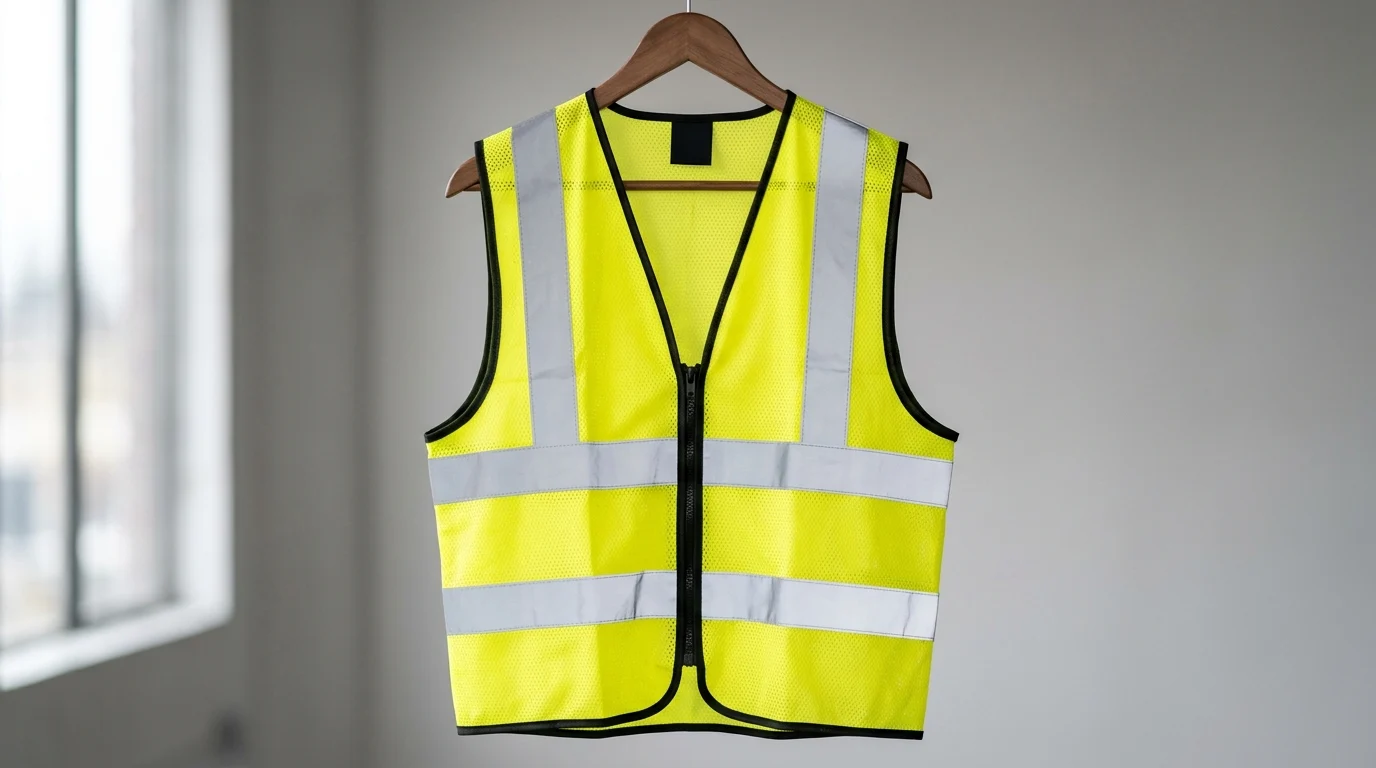
Procurement professionals specifying safety apparel must navigate strict regulatory frameworks to ensure maximum worker visibility. The foundational element of this protective ecosystem is the REFLECTIVE VEST, a garment engineered to provide 360-degree conspicuity in varied lighting conditions, from bright daylight to total darkness illuminated only by vehicle headlights. Understanding the nuances of global performance standards is the first step in responsible occupational safety procurement.
EN ISO 20471 vs ANSI 107
The global market primarily relies on two major high-visibility safety apparel (HVSA) standards: EN ISO 20471 in Europe and ANSI/ISEA 107 in North America. While both dictate the minimum areas for fluorescent background material and retroreflective tape, their classification architectures differ. ANSI 107 categorizes garments by occupational environment—Type O (Off-road), Type R (Roadway), and Type P (Public Safety)—while EN ISO 20471 classifies garments strictly by the total surface area of visible materials (Classes 1 through 3). For example, a Class 3 garment under either standard provides the highest level of visibility for workers facing high-speed traffic exceeding 50 mph (80 km/h).
| Standard & Class | Minimum Background Material | Minimum Reflective Material | Typical Application |
|---|---|---|---|
| ANSI 107 Type R Class 2 | 775 sq. in. (0.50 m²) | 201 sq. in. (0.13 m²) | Roadway workers, traffic control |
| ANSI 107 Type R Class 3 | 1240 sq. in. (0.80 m²) | 310 sq. in. (0.20 m²) | High-speed traffic, nighttime work |
| EN ISO 20471 Class 2 | 0.50 m² | 0.13 m² | Delivery drivers, rail workers |
| EN ISO 20471 Class 3 | 0.80 m² | 0.20 m² | Highway construction, emergency responders |
Key selection criteria
Beyond basic surface area compliance, key selection criteria involve evaluating the photometric performance of the retroreflective tape and the chromaticity of the background fabric. Standards dictate that reflective bands must maintain a minimum coefficient of retroreflection (R_A) of 330 cd/lx/m² when new, tested at specific observation and entrance angles. Buyers must also assess the guaranteed wash cycles; industrial washing specifications typically demand that garments retain their reflective properties and colorfastness after a minimum of 25 to 50 standardized wash cycles at 60°C. Furthermore, the base fabric must fall within strict chromaticity coordinates for fluorescent yellow-green, orange-red, or red to ensure daylight visibility is not compromised by UV degradation over an expected 6-month operational lifecycle.
How to Evaluate a Reflective Vest

Evaluating a high-visibility garment requires balancing rigorous technical specifications with the practical demands of the end-user’s operational environment. A vest that performs perfectly in a laboratory setting may fail in the field if environmental and ergonomic factors are ignored during the procurement process.
Performance and visibility trade-offs
Selecting the appropriate base material involves inherent performance and visibility trade-offs. Fluorescent solid polyester, typically woven at 120gsm to 150gsm Oxford, offers superior durability and a larger contiguous surface area for chromaticity, making it ideal for cooler climates or high-abrasion zones. Conversely, polyester mesh fabrics (often engineered around 110gsm) provide essential thermal dissipation for high-heat environments but may slightly reduce the perceived intensity of the background color due to the open weave.
Tape selection introduces another critical trade-off: exposed glass bead reflective tape offers excellent flexibility and cost-efficiency for standard maintenance tasks, whereas micro-prismatic PVC tape provides superior wet-weather reflectivity and abrasion resistance. However, micro-prismatic materials tend to be stiffer and more susceptible to heat degradation in environments exceeding 65°C.
Sizing, fit, and work environment
Sizing parameters directly impact both safety compliance and ergonomic functionality. A standard procurement run typically spans sizes from S to 3XL to accommodate diverse workforces. Sizing must account for layering over bulky winter outerwear without altering the mandated placement and continuity of the reflective bands. If a garment is too tight, it restricts movement and increases fatigue; if too loose, it poses a severe entanglement hazard.
For personnel operating near heavy machinery or moving parts, a 5-point breakaway system—utilizing calibrated hook-and-loop fasteners at the shoulders, sides, and front—is a critical safety feature. These breakaway points are engineered to release under 2 to 5 pounds of force, preventing the wearer from being dragged into equipment if the vest is snagged.
What Buyers Should Verify Before Ordering
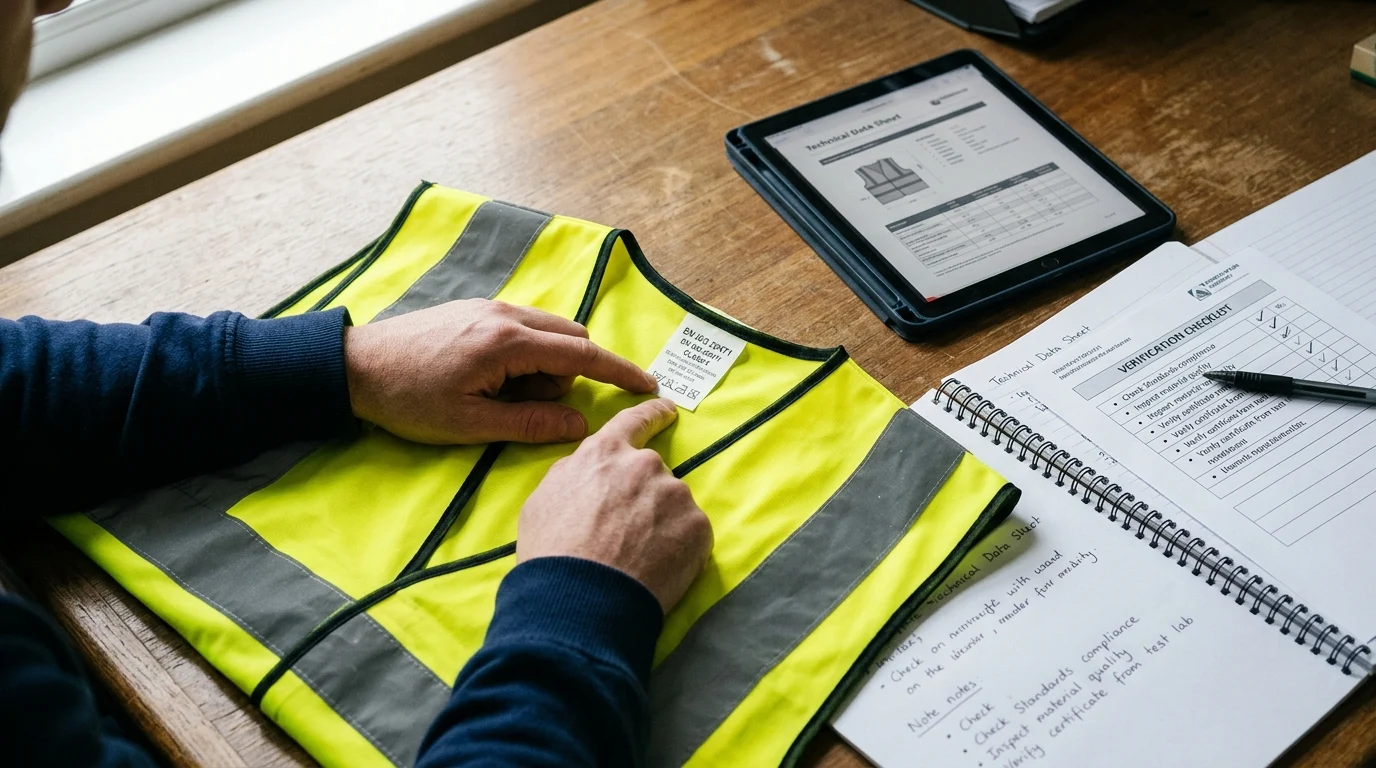
Transitioning from technical specification to bulk procurement requires rigorous vendor qualification. Ensuring that mass-produced deliveries consistently match approved pre-production samples is essential to maintain corporate liability shields and worker safety protocols.
Supplier and quality-control checks
Evaluating a supplier necessitates examining their manufacturing capabilities, raw material sourcing, and quality control infrastructure. Reputable manufacturers will provide verifiable test reports from accredited third-party laboratories confirming that their materials meet EN ISO 20471 or ANSI 107 standards before assembly. Buyers should audit the supplier’s defect rate, targeting a stringent threshold of less than 1.5% for bulk orders to minimize waste.
Establishing the Minimum Order Quantity (MOQ) is also crucial for production planning; a standard OEM MOQ typically starts at 1,000 pieces per design. This volume allows for economies of scale while enabling custom colorways, specific tape configurations, and the integration of specialized features like flame-retardant threads or reinforced binding.
Final purchasing checklist
The final purchasing checklist must encompass lead times, customization limitations, logistics, and documentation. Standard production lead times typically range from 30 to 45 days, depending on the availability of certified fluorescent yarns and custom OEM requirements. When integrating corporate logos, buyers must calculate the exact surface area of the branding; if a logo obscures too much of the fluorescent background material, the garment may fall below the mandatory 0.50 m² threshold, instantly voiding its Class 2 compliance.
Finally, verify that packaging specifications protect the retroreflective glass beads from friction during maritime transit. Ensure that every individual polybag includes the mandatory user information leaflet, detailing precise care instructions, the maximum number of compliant wash cycles, and the specific ISO or ANSI certification data.
Further reading:
Key Takeaways
- The most important conclusions and rationale for REFLECTIVE VEST
- Specs, compliance, and risk checks worth validating before you commit
- Practical next steps and caveats readers can apply immediately
Frequently Asked Questions
What is the main difference between EN ISO 20471 and ANSI 107?
EN ISO 20471 classifies vests by visible material area only, while ANSI 107 also uses work environment types like Type O, R, and P. Choose based on your market and jobsite risks.
Which reflective vest class is best for high-speed traffic work?
Class 3 is the best choice for highways, nighttime work, and traffic over 50 mph or 80 km/h because it provides the highest visibility coverage.
How do I choose between mesh and solid reflective vests?
Use mesh for hot environments where airflow matters. Choose solid polyester for cooler conditions, tougher wear, and stronger fluorescent background coverage.
When should I choose micro-prismatic tape over standard reflective tape?
Choose micro-prismatic tape for wet weather, longer distance visibility, and higher abrasion resistance. Standard glass bead tape is more flexible and usually more cost-effective for general use.
What should I check before ordering reflective vests from Tramigo Reflective?
Confirm the required standard, class, tape type, fabric, wash-cycle durability, and sizing range. For machinery areas, also request a 5-point breakaway vest for added safety.
Post time: May-07-2026