
Introduction
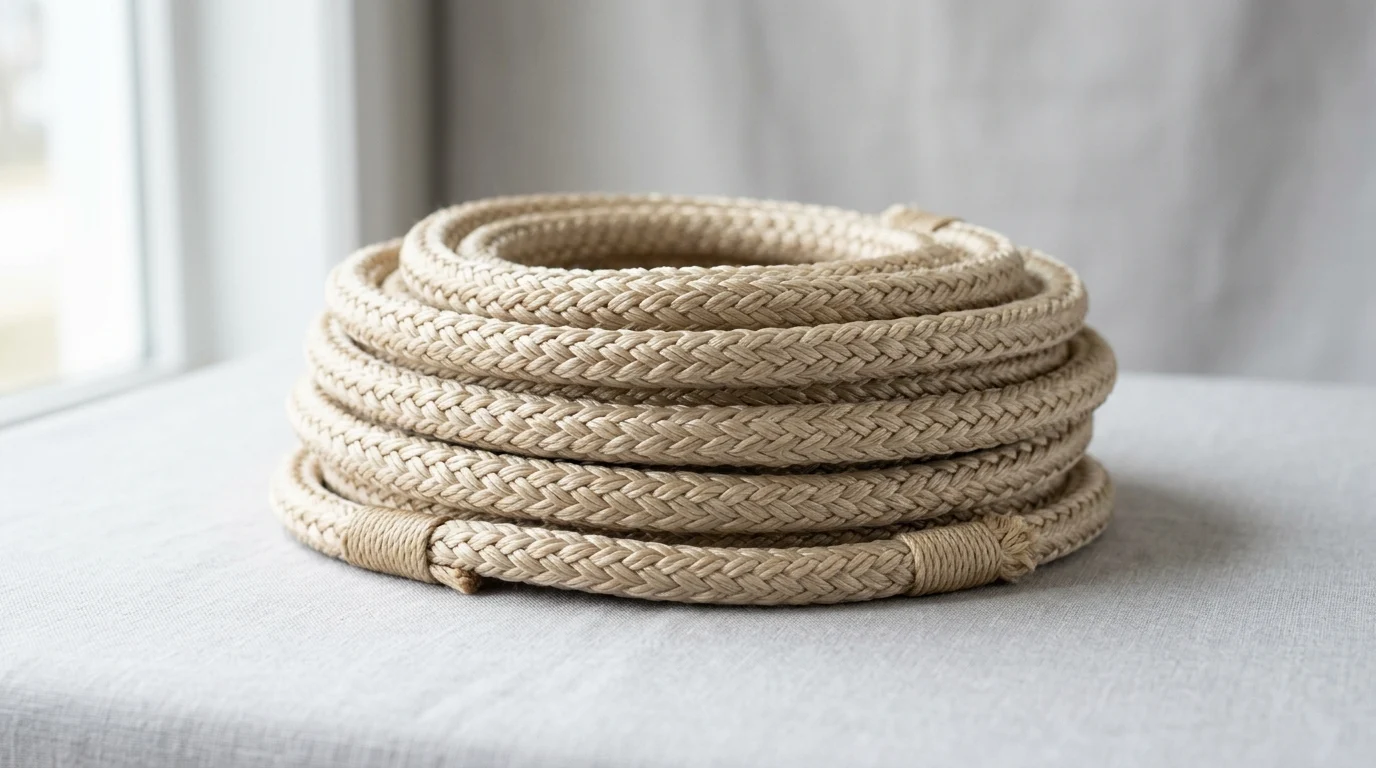
Choosing between paracord and nylon rope is less about brand preference than matching cord construction to the loads, wear, and environmental stress your gear will face. Although both are commonly made from nylon fibers, they differ significantly in diameter, stretch, core design, and overall strength profile. This article focuses on nylon rope and explains where it outperforms paracord in outdoor gear, especially in applications that demand higher load capacity, shock absorption, and durability. By the end, you’ll be able to evaluate key performance factors more confidently and identify the safer, more reliable option for demanding field use.
Why the Paracord vs Nylon Rope Choice Matters
Specifying the correct cordage for outdoor gear and industrial applications is a foundational engineering decision that directly impacts product safety, longevity, and performance. While paracord and traditional nylon rope both utilize polyamide fibers, their structural designs are tailored for entirely different load profiles and environmental conditions.
For procurement managers and product designers, treating these materials as interchangeable can lead to critical component failure. Understanding the precise mechanical differences between a specialized kernmantle cord and a standard twisted or braided nylon rope is essential for optimizing gear reliability and managing manufacturing liabilities.
End-use requirements in outdoor gear
Outdoor gear applications demand specific performance metrics from cordage, ranging from static load-bearing in tent guylines to dynamic shock absorption in climbing and marine equipment. End-use requirements are typically defined by minimum breaking strength (MBS), abrasion resistance, and elongation under tension.
For instance, lightweight backpacking gear requires cordage with a high strength-to-weight ratio, where a standard 4mm cord must support static loads without adding bulk. Conversely, heavy-duty applications like vehicle tie-downs or marine anchor lines demand a nylon rope capable of sustaining repeated dynamic shocks, necessitating a material that can stretch 15% to 25% at breaking load to absorb energy without snapping.
Risks of specifying the wrong rope
Selecting the wrong cordage architecture introduces severe operational hazards. Specifying a static cord where dynamic energy absorption is required can result in catastrophic failure of the anchor points or the rope itself. Similarly, utilizing a highly elastic nylon rope in an application requiring precise tensioning, such as a hammock ridgeline, will result in continuous sagging and functional failure.
A common engineering error involves miscalculating the Safe Working Load (SWL). Industry standards dictate that the SWL for synthetic fiber ropes should be calculated at 10% to 20% of the MBS, depending on the risk to human life and the presence of dynamic loads. Substituting a 550-pound MBS paracord in an application demanding a 500-pound SWL ignores this safety factor, pushing the material to its absolute failure threshold under normal use.
Paracord vs Nylon Rope: Material and Construction Differences
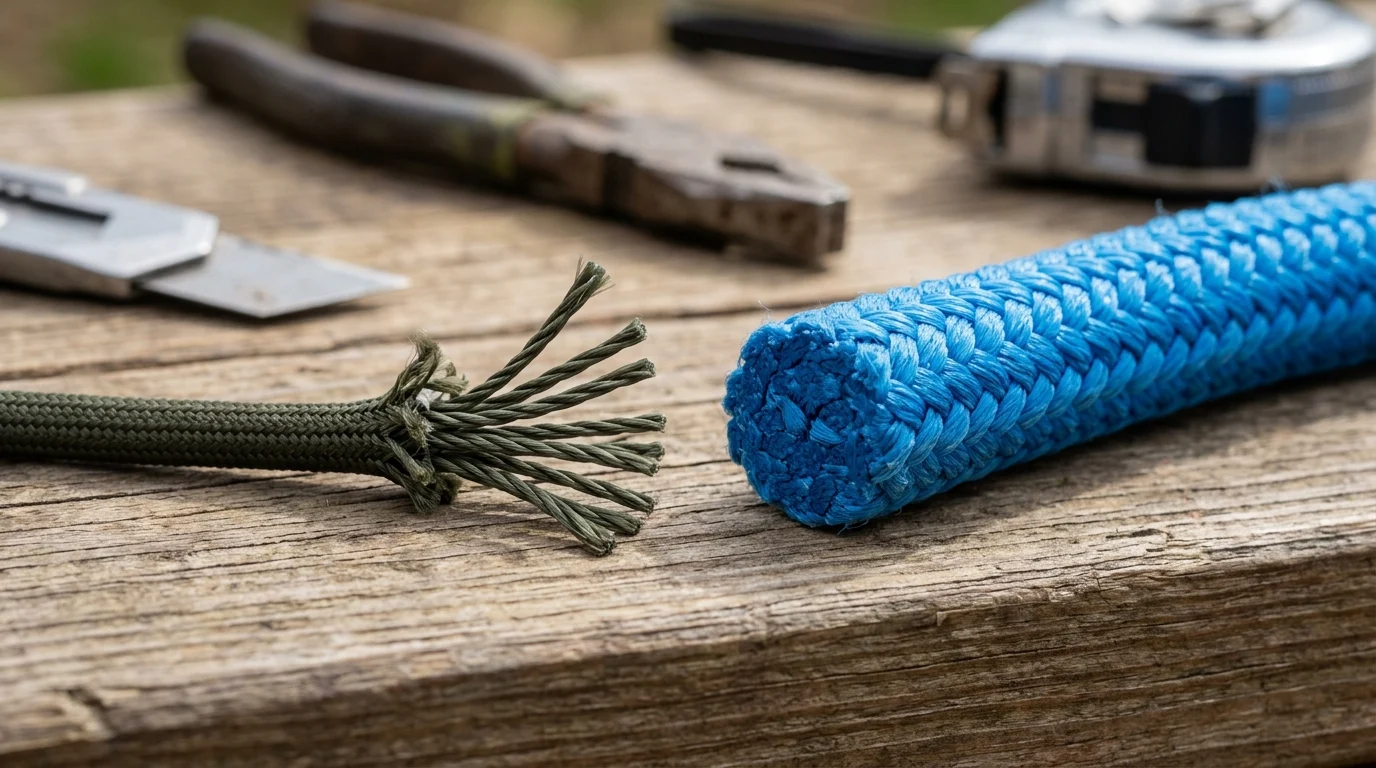
The fundamental distinction between paracord and standard nylon rope lies in their construction methodologies. Both materials leverage the inherent strength and elasticity of nylon (polyamide) fibers, but how those fibers are arranged dictates their mechanical behavior, flexibility, and durability under stress.
How paracord differs from braided and twisted nylon rope
Paracord, specifically the ubiquitous Type III 550 cord, is defined by its kernmantle construction. It features a woven outer sheath (the mantle) surrounding a core (the kern) of parallel or lightly twisted yarns. Authentic MIL-C-5040H Type III paracord contains 7 to 9 inner yarns, each composed of 3 smaller twisted strands, all encased in a 32-strand woven nylon sheath. This design isolates the load-bearing core from external abrasion.
In contrast, standard nylon rope is typically manufactured using either a 3-strand twisted construction or a solid/hollow braid. Twisted nylon rope exposes its primary load-bearing fibers directly to the environment, while double-braided nylon rope mimics the kernmantle concept but generally utilizes thicker, less flexible fiber bundles designed for heavy industrial use rather than lightweight utility.
Strength, elasticity, abrasion, water, and UV performance
Standard 550 paracord offers a Minimum Breaking Strength of 550 lbs at a diameter of approximately 4mm (5/32 inches). However, because of its relatively thin sheath, it possesses moderate abrasion resistance compared to thicker braided ropes. Standard nylon rope, available in diameters from 1/4 inch to over 2 inches, scales dramatically in strength; a 1/2-inch twisted nylon rope typically boasts an MBS exceeding 5,700 lbs.
Environmental factors severely impact polyamide fibers. Nylon absorbs water—up to 8% of its weight—which can reduce its tensile strength by 10% to 15% when fully saturated. Furthermore, continuous exposure to ultraviolet radiation degrades nylon polymers, causing up to a 20% reduction in structural integrity over prolonged outdoor exposure unless the fibers are treated with specialized UV inhibitors during extrusion.
Key comparison table for buyers
To assist in material specification, the following table contrasts the baseline properties of standard Type III paracord with equivalent-diameter standard nylon ropes.
| Specification | Type III Paracord (4mm) | Solid Braid Nylon Rope (4mm) | Twisted Nylon Rope (6mm / 1/4″) |
|---|---|---|---|
| Construction | Kernmantle (Core/Sheath) | Interlocking Braid | 3-Strand Twisted |
| Typical MBS | 550 lbs (249 kg) | 400 – 450 lbs | 1,490 lbs (675 kg) |
| Elongation at Break | ~30% | ~15 – 20% | ~15 – 25% |
| Abrasion Resistance | Moderate (Thin Sheath) | Good | Excellent (Thick Strands) |
| Splicability | Poor / Impossible | Poor | Excellent |
Best Uses for Paracord and Nylon Rope
Matching the correct cordage to the application ensures product viability and user safety. The choice between paracord and traditional nylon rope is dictated by the specific combination of weight constraints, required tensile strength, and the nature of the load (static versus dynamic).
When paracord is the better choice
Paracord excels in applications requiring a high strength-to-weight ratio and extreme versatility. Weighing approximately 6.6 ounces per 100 feet, it is the premier choice for survival gear, tactical equipment, tent guylines, and lightweight lashing.
The modular nature of kernmantle construction adds unique value in emergency scenarios. The inner core strands can be extracted and used independently for fine lashing, gear repair, or emergency fishing line, with each individual inner strand offering roughly 35 lbs of tensile strength. This multi-functional capability makes paracord irreplaceable in the outdoor and tactical gear sectors.
When nylon rope is the better choice
Standard nylon rope is the mandatory choice for heavy-duty load securing, marine environments, and scenarios requiring high energy absorption. When securing heavy cargo or establishing anchor lines, the superior shock-absorbing properties of twisted or double-braided nylon prevent the transfer of destructive kinetic energy to the anchor points.
Thicker diameters provide necessary durability against severe abrasion. For example, a 3/8-inch nylon rope with an MBS of 3,340 lbs is standard for small watercraft mooring lines and heavy tarp tie-downs, where the continuous friction against cleats or grommets would quickly shred the thin outer sheath of a paracord.
How diameter, tensile rating, and knot behavior affect selection
Diameter and tensile rating directly influence a cord’s handling characteristics and knot behavior. Paracord’s pliable nature allows it to flatten slightly under pressure, making it excellent for holding intricate knots like bowlines or taut-line hitches securely. However, under extreme tension, this pliability can cause knots to jam, making them nearly impossible to untie.
Twisted nylon rope holds its cylindrical shape better under load, which is critical when running through pulleys or mechanical ascenders. Furthermore, twisted nylon rope is highly splicable, allowing gear manufacturers to create permanent, high-strength loops without the 30% to 50% reduction in tensile strength typically caused by knotting.
Quality, Compliance, and Supply Factors
For original equipment manufacturers (OEMs) and procurement professionals, ensuring cordage quality requires strict adherence to testing standards and supply chain oversight. The market is saturated with commercial-grade replicas that fail to meet the rigorous specifications of military or industrial standards.
Test standards, labeling, and load ratings
Authentic paracord must conform to MIL-C-5040H standards, which dictate precise denier counts, material composition, and dynamic drop testing. Commercial variants, often labeled simply as “550 cord,” frequently utilize inferior core yarns (such as polyester instead of nylon) or reduce the number of core strands, resulting in MBS variations of +/- 15%.
For broader nylon rope categories, the Cordage Institute (CI) provides the definitive testing frameworks, such as CI 2001 for fiber rope evaluation. Manufacturers must verify that the labeled load ratings reflect actual batch testing rather than theoretical calculations based purely on fiber type and diameter.
Manufacturing consistency, packaging, and lead times
Supply chain logistics for synthetic cordage require careful planning around Minimum Order Quantities (MOQs) and production lead times. Standard spools of paracord or nylon rope are typically available in 300-foot or 1,000-foot lengths. However, specifying custom colors, reflective tracers, or specific chemical treatments (like polyurethane coatings for enhanced abrasion resistance) shifts the procurement into custom manufacturing.
Custom production runs generally demand MOQs ranging from 10,000 to 50,000 feet per SKU. Procurement managers should anticipate lead times of 4 to 6 weeks for domestic manufacturing, whereas offshore sourcing may extend lead times to 8 to 12 weeks, not including customs clearance and ocean freight transit.
Inspection and qualification before purchase
Implementing rigorous inbound inspection protocols is vital before integrating cordage into consumer gear. Quality Assurance (QA) teams should conduct random sampling to verify the sheath pick count—ensuring, for example, that Type III paracord possesses the requisite 32 woven strands per inch for optimal abrasion resistance.
Additionally, raw material composition should be verified via burn tests or chemical analysis to ensure 100% polyamide construction, as the accidental introduction of polypropylene or polyester fibers will drastically alter the cord’s melting point, elasticity, and overall load-bearing capacity.
Decision Framework for Choosing the Right Rope
Establishing a standardized decision framework allows gear designers and procurement teams to objectively select the optimal cordage. This process mitigates the risks of over-engineering, which inflates costs, and under-engineering, which compromises safety.
Step-by-step specification process
The specification process begins by calculating the Maximum Expected Load (MEL) the cordage will experience in the field. Once the MEL is established, a strict Safety Factor must be applied. For general utility and non-life-safety outdoor gear, a safety factor of 5:1 to 10:1 is standard. For life-safety applications, such as climbing or rescue harnesses, the safety factor increases to 15:1.
Following load calculations, designers must evaluate environmental exposure. If the gear will face persistent UV radiation or aquatic environments, the specification must include UV-inhibiting treatments or mandate a diameter increase to offset the anticipated 10% to 20% strength degradation over the product’s lifecycle.
Balancing versatility, safety, and cost
Cost optimization must be balanced against versatility and safety margins. Commercial-grade 550 paracord is highly cost-effective, averaging $3 to $5 per 100 feet at wholesale volumes, making it ideal for mass-market camping accessories. Conversely, marine-grade double-braid nylon rope can exceed $30 to $50 per 100 feet, a necessary premium for high-load, heavy-abrasion environments.
| Cordage Profile | Approx. Wholesale Cost (per 100 ft) | Primary Benefit | Primary Limitation |
|---|---|---|---|
| Commercial 550 Paracord | $3.00 – $5.00 | High strength-to-weight ratio, multi-use core | Low abrasion resistance, thins under load |
| Mil-Spec 550 Paracord | $7.00 – $12.00 | Certified MBS, strict QA consistency | Higher cost for utility applications |
| 1/4″ Twisted Nylon Rope | $12.00 – $18.00 | Excellent shock absorption, easy to splice | Heavy, unravels if ends are unsealed |
| 3/8″ Double Braid Nylon | $30.00 – $50.00 | Extreme durability, high MBS (>3,000 lbs) | Bulky, overkill for lightweight gear |
By strictly aligning the mechanical properties of the cordage with the operational demands of the end product, manufacturers ensure optimal performance, regulatory compliance, and long-term consumer trust.
Key Takeaways
- The most important conclusions and rationale for Nylon Rope
- Specs, compliance, and risk checks worth validating before you commit
- Practical next steps and caveats readers can apply immediately
Frequently Asked Questions
When should I choose nylon rope over paracord?
Choose nylon rope for higher loads, shock absorption, and marine or tie-down use. Use paracord for lightweight utility tasks, gear lashing, and compact carry.
Is 550 paracord strong enough for a 500 lb working load?
No. A 550 lb breaking strength is not a safe 500 lb working load. Apply a safety factor; typical synthetic rope SWL is only 10% to 20% of MBS.
How does nylon rope perform when wet outdoors?
Nylon absorbs water, gains weight, and can lose about 10% to 15% of tensile strength when saturated. For wet conditions, size the rope with that reduction in mind.
Does nylon rope stretch too much for precise tensioning?
It can. Nylon is elastic, which helps absorb shock, but it may sag in ridgelines or other fixed-tension setups. Use it where energy absorption matters more than exact tension.
What nylon rope construction is best for outdoor gear?
Braided nylon rope is generally better for durability and handling, while 3-strand twisted nylon is common for heavy-duty utility. Match construction to load, abrasion, and flexibility needs.
Post time: May-26-2026