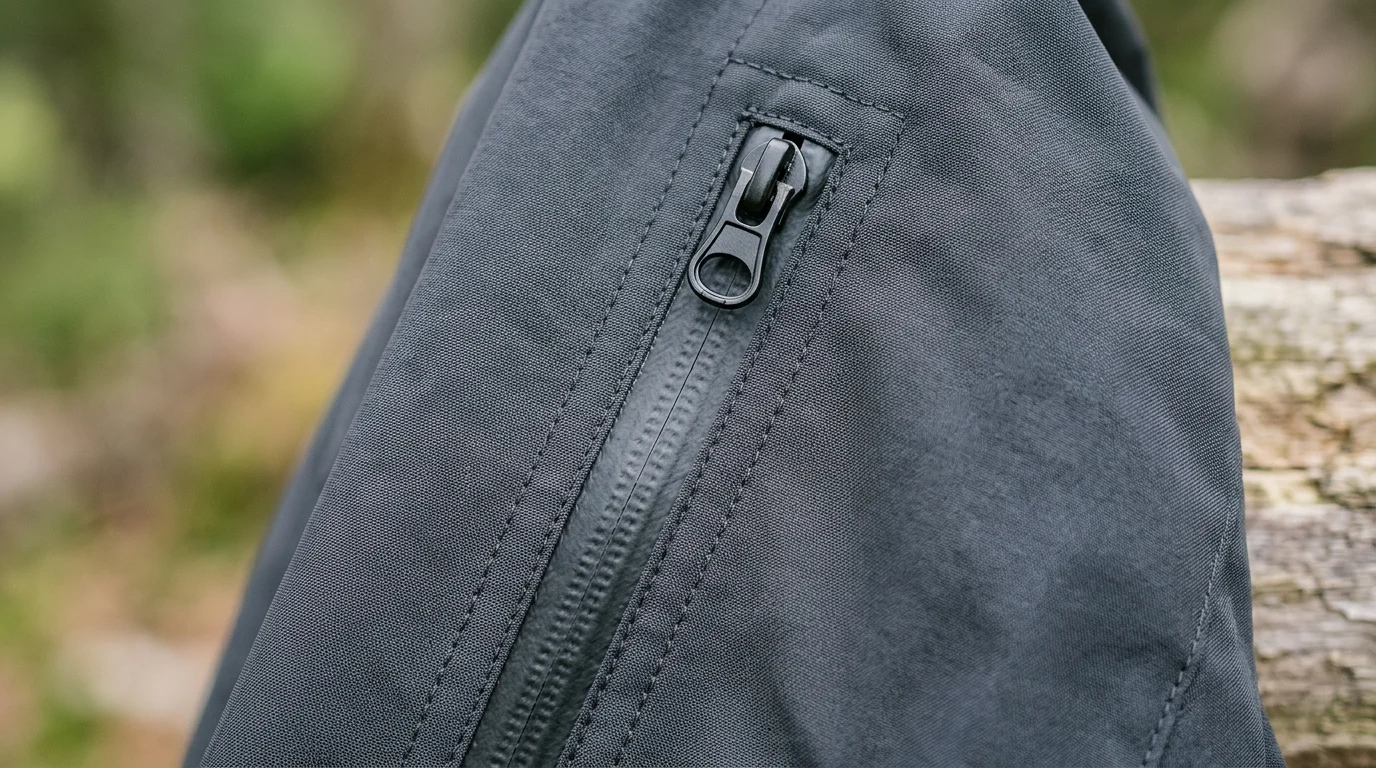
Why the right waterproof zipper supplier matters
Procuring components for high-end down jackets requires uncompromising attention to technical reliability. In premium outerwear, the closure system is frequently the primary point of structural or weatherproofing failure. Selecting the right waterproof zipper supplier is not merely a purchasing decision; it is a foundational step in ensuring product integrity, brand reputation, and long-term commercial viability.
A specialized supplier provides more than just raw materials. They offer advanced manufacturing techniques, rigorous testing protocols, and consistent quality control that generic accessory factories cannot match. For procurement teams, understanding the stakes of this specific component is the first step toward building a resilient supply chain.
Performance impact on outerwear quality
The primary function of a waterproof zipper is to maintain the hydrostatic integrity of the garment without sacrificing operability. High-end down jackets typically utilize polyurethane (PU) coated or thermoplastic polyurethane (TPU) laminated zippers. These components dictate the hydrostatic head rating at the closure points. A premium supplier will engineer zippers capable of withstanding a minimum of 3,000mm to 5,000mm of hydrostatic pressure.
Inferior lamination techniques result in stiffness, increased friction, and eventual delamination. When a zipper tape lacks appropriate flexibility, it compromises the drape of the jacket and increases the physical effort required by the end-user. Conversely, expertly manufactured waterproof zippers maintain a smooth glide even in sub-zero environments, directly elevating the perceived value of the outerwear.
Brand and customer risk factors
Component failure poses a severe financial and reputational risk to outerwear brands. Failure rates exceeding 0.5% in field use can trigger expensive warranty claims, retail chargebacks, and negative consumer reviews. In high-end down jackets, where retail prices often exceed $500, a malfunctioning $1.50 zipper effectively destroys the entire product’s value.
Common risks associated with unverified suppliers include the PU coating peeling off after 10 to 15 standard wash cycles, slider derailment due to weak top stops, and tape discoloration caused by UV exposure. Partnering with a vetted, high-tier manufacturer minimizes these liabilities through strict adherence to international testing standards and verifiable quality assurance protocols.
Key sourcing criteria to define early
To streamline the sourcing process, buyers must establish definitive technical criteria before initiating supplier outreach. Procurement documentation should explicitly state the required tape width, which typically ranges from a standard 30mm for main front closures to a narrow 20mm for pocket applications.
Additionally, buyers must define the slider lock mechanism, such as auto-lock for main closures or semi-automatic for ventilation zips, alongside the desired coating finish, which can be matte, glossy, or textured. Establishing these parameters early prevents miscommunication, ensures accurate initial quotations, and filters out suppliers incapable of meeting premium specifications.
Key waterproof zipper specifications for down jackets
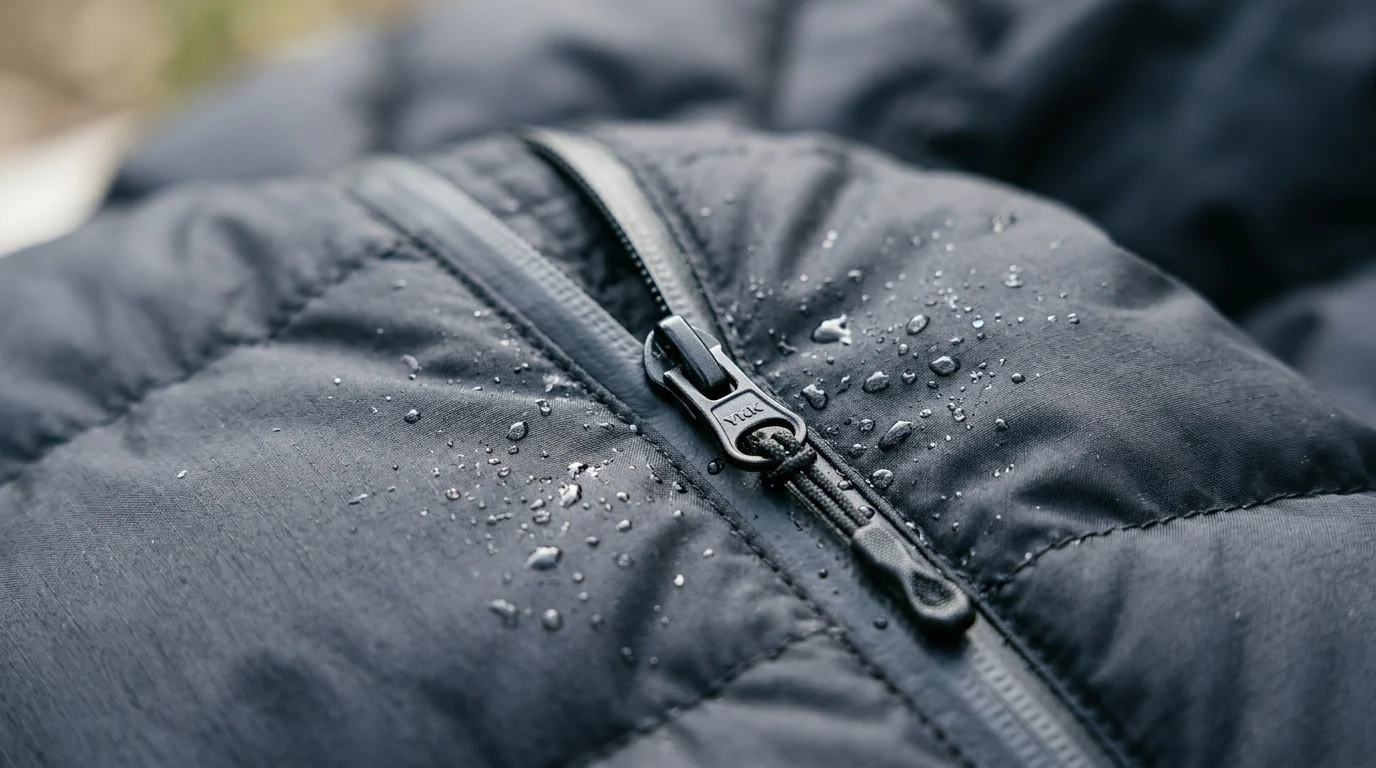
Defining exact technical specifications ensures parity when evaluating quotations and prevents the substitution of inferior materials during mass production. For high-end down jackets, every element of the waterproof zipper—from the coil material to the lamination process—must meet stringent performance benchmarks.
Procurement managers must move beyond generic requests for “waterproof zippers” and mandate specific construction details that align with the extreme environments premium outerwear is designed to endure.
Zipper types and material options
The structural foundation of most waterproof zippers for outerwear is the nylon coil, typically specified in #5 or #7 sizes for main front closures to balance strength and weight. The waterproofing is achieved by applying a reverse PU or TPU coating over the coils. This design hides the teeth and presents a sleek, weather-resistant outer surface.
Alternatively, injection-molded plastic zippers (Vislon style) are frequently specified for heavy-duty down jackets. While slightly bulkier, they offer distinct aesthetic profiles, superior resistance to salt corrosion, and reliable performance in icy conditions. The choice between nylon coil and injection-molded plastic dictates not only the jacket’s weather resistance but also its manufacturing assembly process.
Durability and weather resistance standards
Durability in extreme climates is a non-negotiable metric for high-end down jackets. Cold crack resistance is critical; premium waterproof zippers must be certified to withstand temperatures of -30°C for 24 hours without the TPU film fracturing or losing adhesion to the fabric tape.
Cycle testing is equally important to gauge the lifespan of the slider and tape. Industry standards for luxury outerwear demand that the zipper maintains structural and waterproof integrity after a minimum of 5,000 reciprocating cycles. Furthermore, the crosswise strength of the zipper chain must exceed 400 Newtons to prevent bursting under the tension of a heavily insulated jacket.
Quality control checkpoints
Implementing strict quality control checkpoints is essential for maintaining consistency across bulk orders. Buyers should require comprehensive testing reports for each production batch, focusing on hydrostatic pressure, peel strength, and colorfastness.
The following table outlines the expected QC benchmarks for premium waterproof zippers compared to acceptable tolerances:
| Specification | Premium Grade Standard | Acceptable Tolerance |
|---|---|---|
| Hydrostatic Pressure | > 5,000 mm | ± 5% |
| Reciprocating Cycles | 10,000 cycles | Min 5,000 cycles |
| Tape Peeling Strength | > 35 N/cm | > 25 N/cm |
| Cold Crack Resistance | -30°C for 24 hours | -20°C for 12 hours |
| Colorfastness to Washing | Grade 4-5 | Grade 4 |
How to evaluate waterproof zipper suppliers in China
China hosts a vast ecosystem of garment accessory manufacturers, but only a select fraction possess the specialized machinery and technical expertise required to produce expedition-grade waterproof zippers. Evaluating these suppliers demands a rigorous, multi-tiered approach.
A successful evaluation goes beyond analyzing unit costs; it involves assessing manufacturing infrastructure, production scalability, and the factory’s historical performance in the premium export market.
Factory audit and sample review points
A comprehensive factory audit should prioritize the evaluation of lamination machinery lines and the presence of in-house testing laboratories. High-end suppliers maintain dedicated, climate-controlled curing rooms for PU coatings to ensure consistent adhesion regardless of external weather conditions.
During sample review, procurement teams must inspect the uniformity of the matte or glossy finish, the smoothness of the slider action, and the integrity of the top and bottom stops. Key indicators of a capable factory include ISO 9001:2015 certification, organized raw material storage, and documented calibration schedules for their hydrostatic testing equipment.
MOQ, lead time, and pricing structure
Understanding the operational parameters of a supplier is vital for production planning. For custom-dyed waterproof zippers, standard Minimum Order Quantities (MOQs) typically range from 3,000 to 5,000 pieces per colorway. Factories offering significantly lower MOQs often achieve this by utilizing off-the-shelf, lower-grade tapes rather than custom extrusions.
Lead times for premium orders generally span 15 to 25 days, depending on the complexity of the puller tooling and dyeing requirements. Pricing structures reflect this quality; a standard 70cm #5 waterproof zipper suitable for a high-end down jacket will range from $0.60 to $1.20 USD, influenced heavily by the slider’s metallic composition, anti-corrosion plating, and the tape’s TPU thickness.
Customization and development capabilities
High-end outerwear frequently relies on bespoke hardware to differentiate brand identity. Evaluated suppliers must demonstrate robust customization capabilities, including the production of laser-cut silicone pullers, the integration of reflective films, and precision logo embossing on slider bodies.
Color matching is a critical capability. Suppliers must be able to match custom Pantone references with a Delta E variance of less than 1.0. The ability to develop proprietary waterproof zipper designs, such as contrasting tooth and tape colors or asymmetrical lamination patterns, separates elite manufacturing partners from standard commodity producers.
Compliance, packaging, and logistics requirements
Navigating international trade regulations and ensuring components arrive in pristine condition requires strict adherence to compliance and logistics protocols. Waterproof zippers are susceptible to physical and chemical degradation during transit if improperly handled.
Establishing clear requirements for chemical safety, packaging standards, and shipping procedures protects the buyer from customs delays, environmental damage, and subsequent manufacturing bottlenecks.
Chemical compliance and traceability
Compliance with international chemical safety standards is a strict prerequisite for premium garment accessories. Waterproof zippers must achieve Oeko-Tex Standard 100 Class I or II certification to guarantee the absence of harmful substances, particularly phthalates and heavy metals often found in low-grade plastics and dyes.
For the European market, REACH compliance is non-negotiable. This requires that the lead content in all metallic components, such as sliders and stops, remains strictly below 90 ppm (parts per million). Suppliers must provide verifiable, third-party testing certificates from recognized laboratories like SGS or Intertek to ensure full traceability.
Packaging and carton marking standards
The physical packaging of waterproof zippers directly impacts their usability upon arrival. Zippers must be packed completely flat; folding or tightly coiling the chains will cause permanent creasing in the TPU film, compromising the waterproof seal and complicating the sewing process.
Standard export packaging dictates the use of 5-ply corrugated cardboard cartons. To prevent crushing the bottom layers, cartons should have a maximum gross weight restriction of 15 kg to 20 kg. Clear carton marking standards must be enforced, detailing the PO number, colorway, size, quantity, and specific storage warnings such as “Keep Dry” and “Do Not Crush.”
Shipping, warehousing, and delivery risks
Ocean freight introduces significant moisture and temperature risks. High humidity inside shipping containers can cause metallic sliders to oxidize and PU coatings to degrade. To mitigate this, silica gel desiccants must be included within every sealed inner polybag.
Upon arrival, warehouse storage conditions must be carefully managed. Waterproof zippers should be stored in environments with temperatures maintained between 15°C and 25°C, and relative humidity kept below 60%. Prolonged exposure to high heat or direct sunlight in uncontrolled warehouses will accelerate the aging of the lamination, rendering the zippers brittle before they are even attached to the garments.
Decision framework for supplier selection
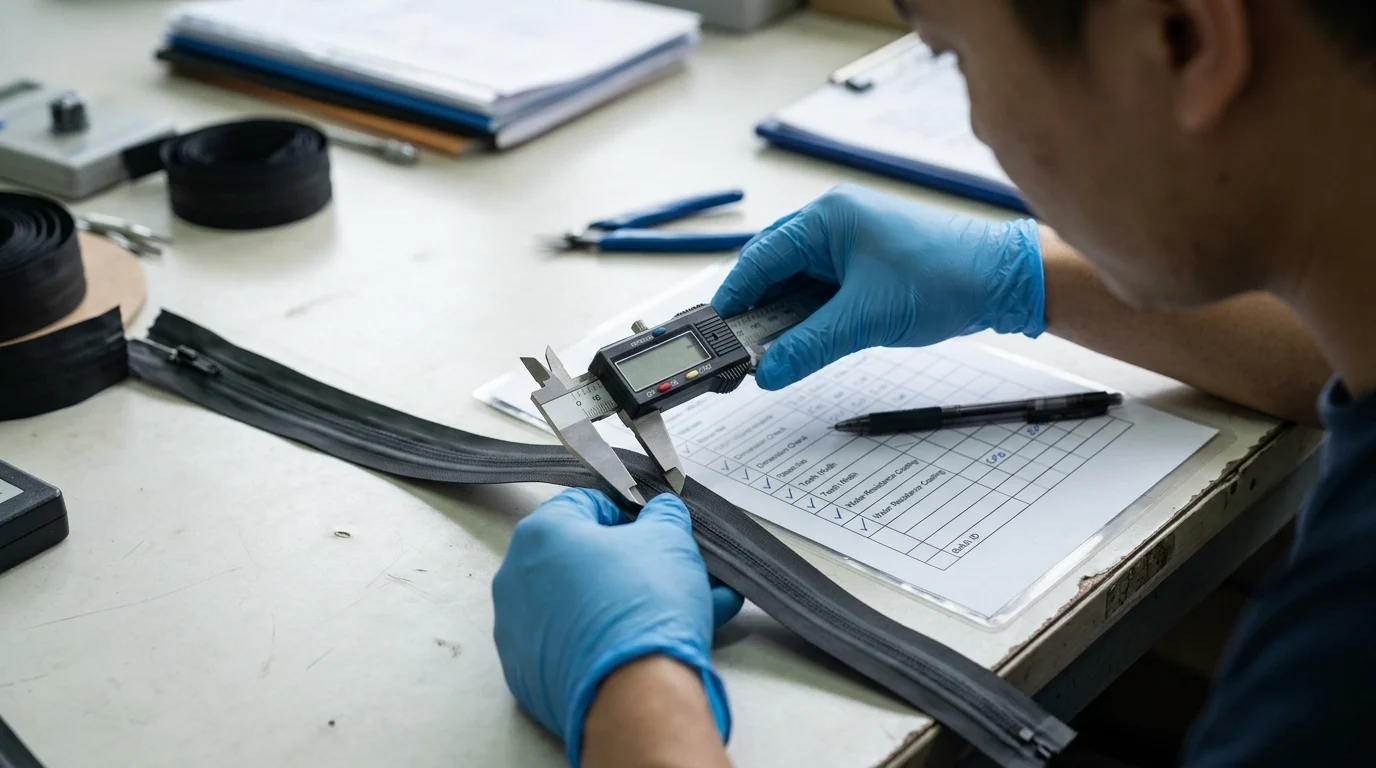
Finalizing a supplier for critical components requires a structured methodology to balance unit costs against technical capability, communication efficiency, and supply chain reliability.
Procurement managers must synthesize audit data, sample testing results, and logistical assessments to make an informed, risk-adjusted sourcing decision.
Using comparison tables and trial orders
Utilizing a standardized matrix allows buyers to objectively compare shortlisted factories. Before committing to bulk production, executing a trial order of 500 to 1,000 pieces is highly recommended to test the supplier’s actual delivery speed, communication under pressure, and batch consistency.
The following evaluation matrix illustrates the contrasting profiles of high-end versus mass-market zipper suppliers:
| Evaluation Criteria | Weight | High-End Supplier Profile | Mass-Market Supplier Profile |
|---|---|---|---|
| Defect Rate Guarantee | 30% | < 0.3% | > 2.0% |
| Custom Color MOQ | 20% | 3,000 pcs | 10,000+ pcs |
| Testing Infrastructure | 25% | In-house hydrostatic labs | Outsourced or none |
| Communication Speed | 15% | < 12 hours response | 24-48 hours response |
| Tooling Development | 10% | 7-10 days | 15-20 days |
Total cost and risk assessment
A narrow focus on the lowest unit price frequently leads to catastrophic supply chain failures. Procurement teams must calculate the Total Landed Cost (TLC), which factors in freight, customs duties, potential rework, and the statistical probability of delayed shipments.
Risk assessment is paramount in high-end outerwear. Securing a $0.20 saving on a waterproof zipper is a false economy if it results in a $200 down jacket failing field tests and being rendered unsellable. Buyers must quantify the financial risk of component failure and weigh it directly against the premium charged by top-tier, quality-assured manufacturers.
When to use a sourcing partner
For many global brands and importers, managing the complexities of overseas factory audits, localized negotiation, and strict QC enforcement is resource-intensive. Engaging a professional end-to-end sourcing partner in China can significantly mitigate on-the-ground risks and streamline procurement.
A dedicated sourcing partner provides vital local oversight, conducting thorough factory evaluations, supervising production runs, and executing pre-shipment inspections to ensure that every waterproof zipper meets the exact specifications required for luxury down jackets.
Key Takeaways
- Wholesale sourcing and supply-chain implications for waterproof zipper
- Specifications, compliance, and commercial terms buyers should validate
- Actionable recommendations for distributors and procurement teams
Frequently Asked Questions
What zipper type is best for high-end waterproof down jackets?
Usually #5 or #7 reverse-coil PU/TPU waterproof zippers for front closures. For harsher, icy use, molded plastic waterproof zippers can offer better durability and salt resistance.
Which specifications should buyers confirm before requesting quotes?
State tape width, zipper size, slider lock type, coating finish, color, cold-resistance target, and test requirements. Clear specs help avoid mismatched samples and inaccurate pricing.
What quality tests should a waterproof zipper supplier provide?
Ask for hydrostatic resistance, cycle testing, wash durability, UV resistance, and cold-crack results, ideally down to -30°C. Request recent reports tied to the same zipper construction.
How can Tramigo help reduce sourcing risk for waterproof zippers?
Tramigo can verify factories, collect samples, negotiate terms, supervise production, run QC inspections, and coordinate shipping from China, helping buyers secure stable quality and lower sourcing risk.
What are common failure signs of low-quality waterproof zippers?
Watch for PU/TPU peeling, stiff pulling, slider derailment, weak top stops, and tape discoloration after washing or UV exposure. These issues often lead to leakage and warranty claims.
Post time: Apr-20-2026