Introduction
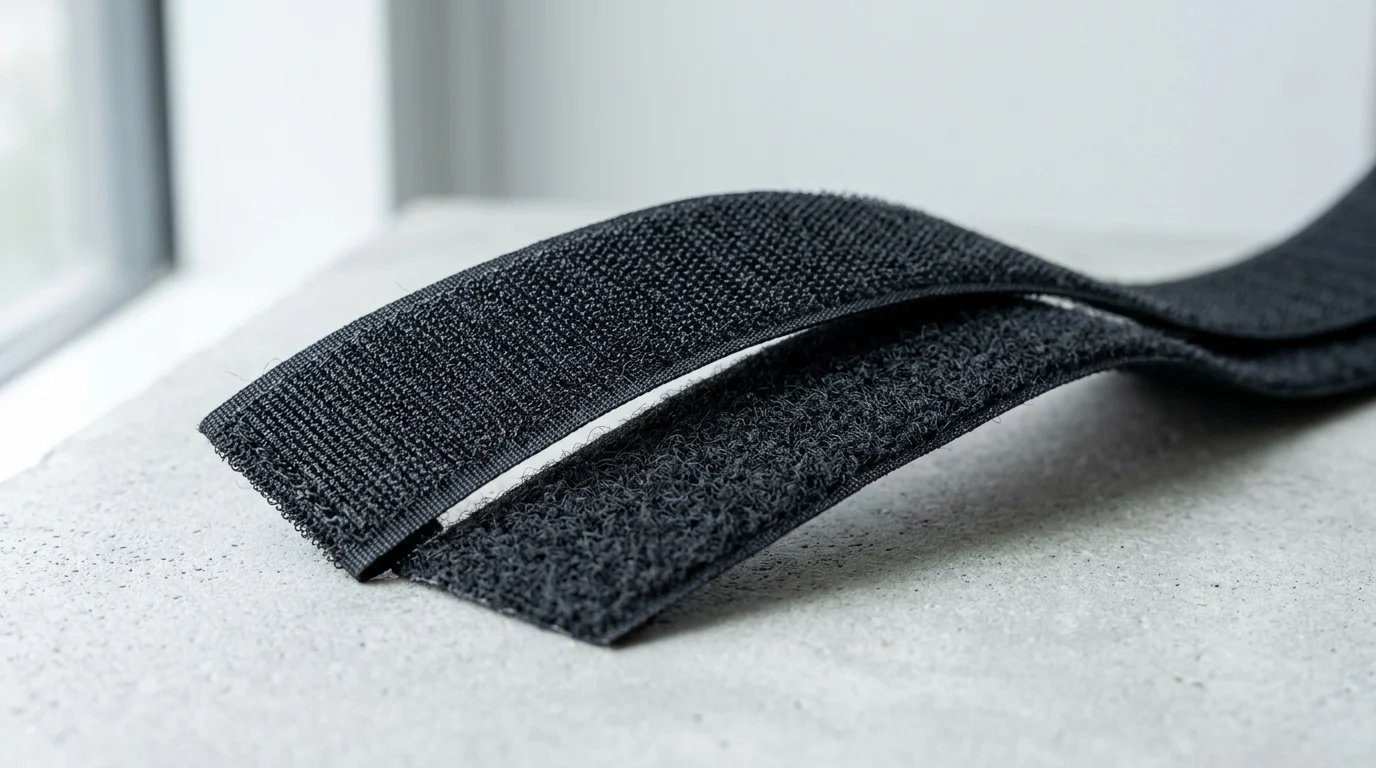
Selecting hook and loop tape for industrial use involves more than matching size and adhesive. Performance depends on the interaction between hook profile, loop density, base material, adhesive chemistry, and the stresses of the end application, from vibration and repeated opening cycles to heat, moisture, and chemical exposure. This article outlines the key criteria industrial buyers should evaluate, including load requirements, substrate compatibility, environmental conditions, and durability expectations. By the end, readers will have a practical framework for comparing tape options and choosing a fastening solution that supports reliable assembly performance, service life, and maintenance needs.
How Should Industrial Buyers Approach Hook and Loop Tape Selection
Industrial procurement of hook and loop tape requires navigating a complex matrix of polymer science, adhesive chemistry, and mechanical engineering. Far removed from consumer-grade fasteners, industrial variants are highly engineered closure systems designed to meet exacting specifications in aerospace, medical, automotive, and tactical manufacturing.
Why selection affects assembly performance
Assembly performance depends heavily on the fastener’s ability to maintain closure under dynamic and static stresses. Inadequate selection leads to premature failure, especially in high-vibration environments where structural integrity is paramount. For example, in aerospace interior paneling, closure shear strengths must routinely exceed 20 PSI to prevent panel detachment during turbulence. Engineers must evaluate the frequency of access required; a maintenance panel accessed daily necessitates a different hook profile than a headliner installed for the lifecycle of the vehicle.
Which applications require different tape types
Different industrial sectors demand distinct polymer constructions and profiles. Automotive applications frequently require robust nylon blends capable of withstanding sustained cabin temperatures up to 85°C (185°F) without polymer degradation. Conversely, medical wearables and orthopedics demand softer, skin-friendly polypropylene hooks with a micro-profile thickness of less than 1.2mm to prevent skin abrasion while maintaining sufficient peel strength. Tactical and military applications introduce further complexities, often mandating infrared (IR) compliant dye lots and extreme weather resistance.
What Hook and Loop Tape Specifications Matter Most
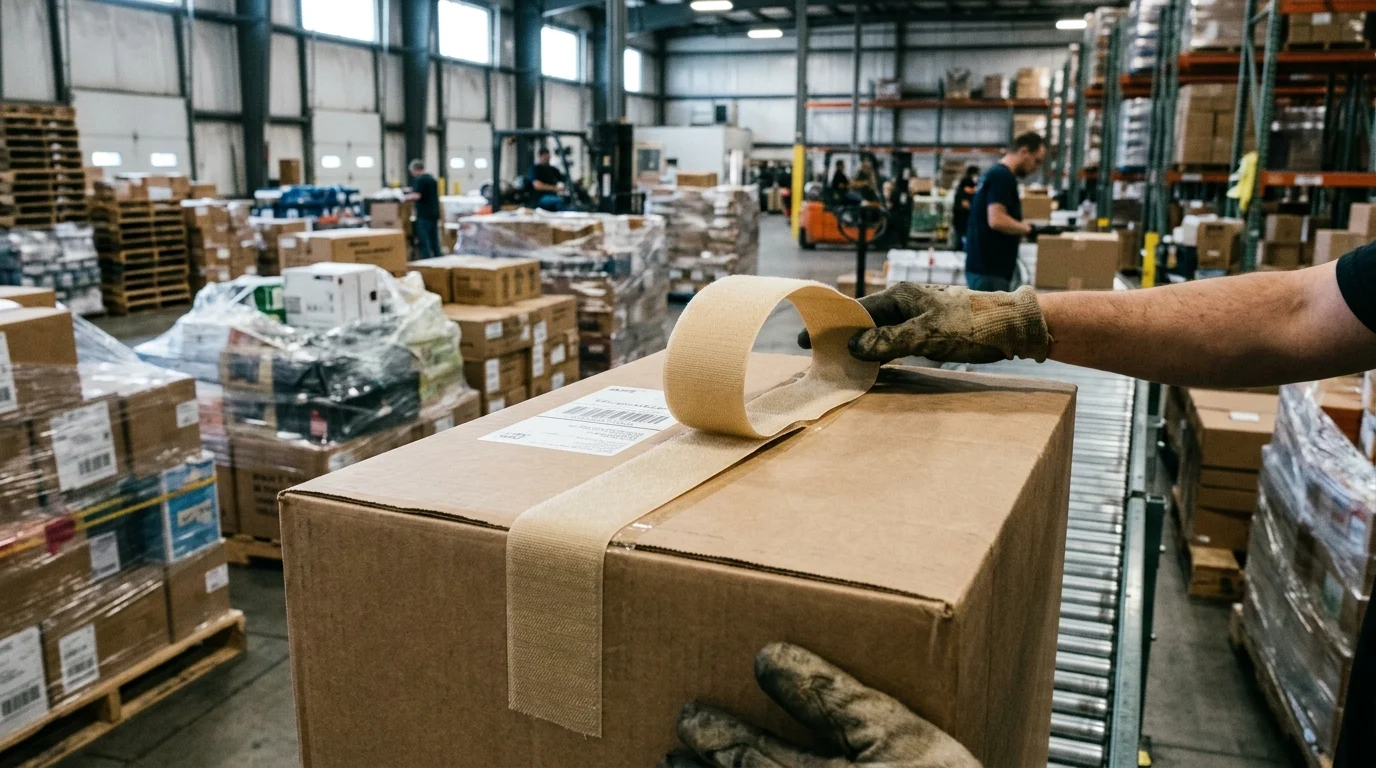
Evaluating hook and loop tape demands a rigorous analysis of both mechanical fastening metrics and chemical adhesive specifications. Relying on generic strength claims without understanding the specific testing parameters frequently results in systemic component failure.
How strength, cycle life, peel, and shear differ
Mechanical performance is primarily quantified through peel strength, shear strength, and cycle life. Peel strength measures the resistance to a 90-degree or 180-degree separation force, whereas shear strength evaluates resistance to parallel sliding forces. A standard industrial woven nylon tape typically offers a peel strength of 2.0 PIW (pounds per inch of width) and a robust shear strength of 14.0 PSI. Cycle life determines long-term longevity; high-cycle woven nylon fasteners are engineered to retain at least 50% of their baseline strength after 10,000 open-and-close cycles, whereas low-cycle extruded alternatives may degrade significantly after just 1,000 cycles.
Which backing, adhesive, and environmental ratings matter
The adhesive backing is often the primary point of failure in demanding environments, making chemical selection as critical as the fastener itself. Rubber-based adhesives provide high initial tack and perform exceptionally well on low surface energy (LSE) plastics, but they degrade rapidly when exposed to continuous temperatures above 50°C. In contrast, acrylic adhesives require a 72-hour dwell time to achieve maximum cross-linking and bond strength, yet they offer superior UV resistance and maintain structural integrity in extreme temperature ranges from -20°C to 120°C.
| Adhesive Type | Initial Tack | Temperature Range | UV Resistance | Best For |
|---|---|---|---|---|
| Rubber-Based | High | -10°C to 50°C | Low | Indoor use, LSE plastics, quick assembly |
| Standard Acrylic | Medium | -20°C to 100°C | High | Outdoor applications, metal, glass |
| Modified Acrylic | Medium-High | -20°C to 120°C | High | High-heat automotive, mixed substrates |
| Silicone | Low | -40°C to 200°C | Very High | Extreme environments, silicone substrates |
How Can Buyers Compare Hook and Loop Tape Options
Procurement engineers must benchmark hook and loop tape against alternative grades and completely different fastening methodologies to ensure optimal system design. A comprehensive comparative analysis prevents over-engineering while safeguarding against catastrophic field failures.
What to include in a construction and grade comparison
Construction methodology fundamentally alters the performance profile of the tape. Woven nylon remains the industry standard for maximum durability and high-cycle applications, while knit loops offer enhanced multi-directional stretch, making them ideal for flexible apparel and medical compression garments. Molded hooks (often referred to as High Technology Hook or HTH), manufactured through the continuous extrusion of polypropylene or nylon, provide a significantly lower profile—often under 0.8mm total engaged thickness—and deliver aggressive initial engagement at the cost of overall cycle life.
| Construction Grade | Typical Cycle Life | Engaged Thickness | Primary Advantage |
|---|---|---|---|
| Woven Nylon Hook/Loop | 10,000+ | 2.5mm – 3.5mm | Maximum durability, high shear strength |
| Knit Loop | 3,000 – 5,000 | 1.5mm – 2.5mm | Flexibility, conforms to curved surfaces |
| Extruded Molded Hook | 500 – 1,000 | 0.5mm – 1.2mm | Ultra-low profile, high peel strength |
When hook and loop tape is preferable to zippers
When comparing hook and loop tape to mechanical zippers, the primary industrial advantages lie in weight reduction, variable tensioning, and tolerance for misalignment. Hook and loop closures can reduce fastener weight by up to 40% compared to heavy-duty brass or molded plastic zippers, a critical performance metric in aerospace weight-saving initiatives and tactical gear design. Furthermore, tape allows for adjustable closure tension and rapid blind fastening, entirely eliminating the need for precise track alignment that zippers demand, thereby reducing assembly line cycle times and user friction.
How Should Procurement Teams Evaluate Suppliers
Securing a reliable supply chain for fastening components requires rigorous auditing of supplier capabilities, quality control frameworks, and manufacturing flexibility. A supplier’s ability to scale and maintain tight tolerances directly impacts production line efficiency.
Which test data, certifications, and traceability controls matte
r
Tier-one suppliers must provide comprehensive technical data sheets (TDS) backed by standardized testing protocols, such as ASTM D5169 for shear strength and ASTM D5170 for peel strength. For highly regulated industries, specialized certifications are non-negotiable; aerospace applications mandate compliance with FAR 25.853 for flame retardancy, while medical grades often require ISO 10993 certification for biocompatibility. Rigorous quality control protocols should guarantee a lot-to-lot variance of less than 5% in mechanical performance, ensuring that automated assembly equipment does not require constant recalibration.
How customization, converting, and order quantities affect fit
Supplier value extends significantly into secondary converting capabilities. The ability to supply precision die-cut pieces, kiss-cut rolls on a release liner, or custom-slit widths directly dictates assembly line throughput. Buyers must closely evaluate Minimum Order Quantities (MOQs) alongside these converting services to ensure alignment with production schedules. While standard 25-meter rolls of commercial-grade tape might have negligible MOQs, custom-dyed, fire-retardant, or specialty-adhesive runs frequently require production commitments exceeding 10,000 meters, necessitating accurate forecasting and inventory management.
What Is the Best Decision Process for Selection
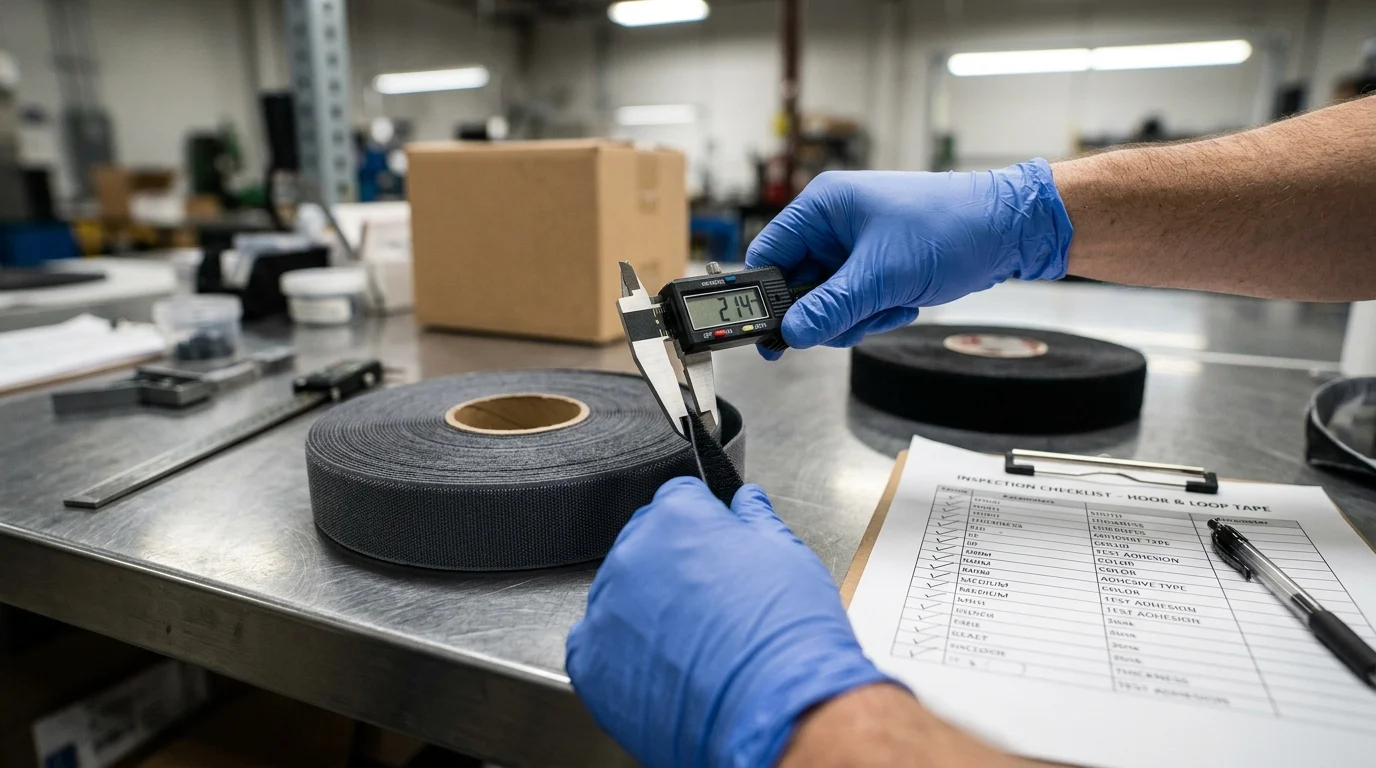
Establishing a standardized procurement framework ensures that design engineers and sourcing professionals align on technical requirements and commercial constraints. A systematic approach mitigates the risk of late-stage design changes.
Which step-by-step method helps match tape to requirements
An effective decision matrix begins with defining the mechanical load profile and environmental exposure. Engineers should calculate the maximum anticipated shear and peel forces, applying a safety factor of 1.5 to 2.0 depending on the application’s criticality. Next, teams must select the appropriate polymer base and adhesive backing based on substrate surface energy and thermal requirements. Finally, the chosen hook and loop tape should undergo a rigorous prototyping phase, typically involving a 30-day environmental chamber test to simulate accelerated aging, UV exposure, and thermal cycling before final specification approval.
How to balance price, performance, and validation time
Balancing unit price against performance and validation time ultimately dictates the final procurement selection. While a commodity rubber-backed nylon may cost as little as $0.15 per yard, premature adhesive failure in a high-temperature application can incur exponential warranty and rework costs. Procurement teams must analyze the Total Cost of Ownership (TCO), factoring in the potential reduction in labor assembly time achieved by utilizing premium pre-cut, liner-less tapes against higher upfront material expenditures. Strategic validation limits over-specifying while ensuring the chosen fastener meets the strict operational demands of the end product.
Key Takeaways
- The most important conclusions and rationale for Hook & Loop Tape
- Specs, compliance, and risk checks worth validating before you commit
- Practical next steps and caveats readers can apply immediately
Frequently Asked Questions
Which hook and loop tape is best for high-cycle industrial use?
Woven nylon is usually best for repeated opening and closing. It offers strong peel and shear performance and can retain usable strength through thousands of cycles in panels, covers, and equipment access points.
How do I choose the right adhesive backing for industrial conditions?
Use rubber adhesive for quick indoor bonding and some LSE plastics, acrylic for UV and outdoor exposure, modified acrylic for higher heat, and silicone for extreme temperatures or silicone substrates.
What specifications should buyers check first?
Start with peel strength, shear strength, cycle life, temperature range, substrate compatibility, and thickness. Match these to your real application instead of relying on generic strength claims.
When should I use molded hook instead of woven hook and loop tape?
Choose molded hook when you need a lower-profile closure and fast engagement, such as slim assemblies. Use woven tape when durability and longer cycle life matter more than minimum thickness.
Can TRAMIGO help source custom hook and loop tape from China?
Yes. TRAMIGO supports sample collection, factory verification, customization, QC inspection, production follow-up, and shipping coordination to reduce sourcing risk for importers and brands.
Post time: Apr-27-2026