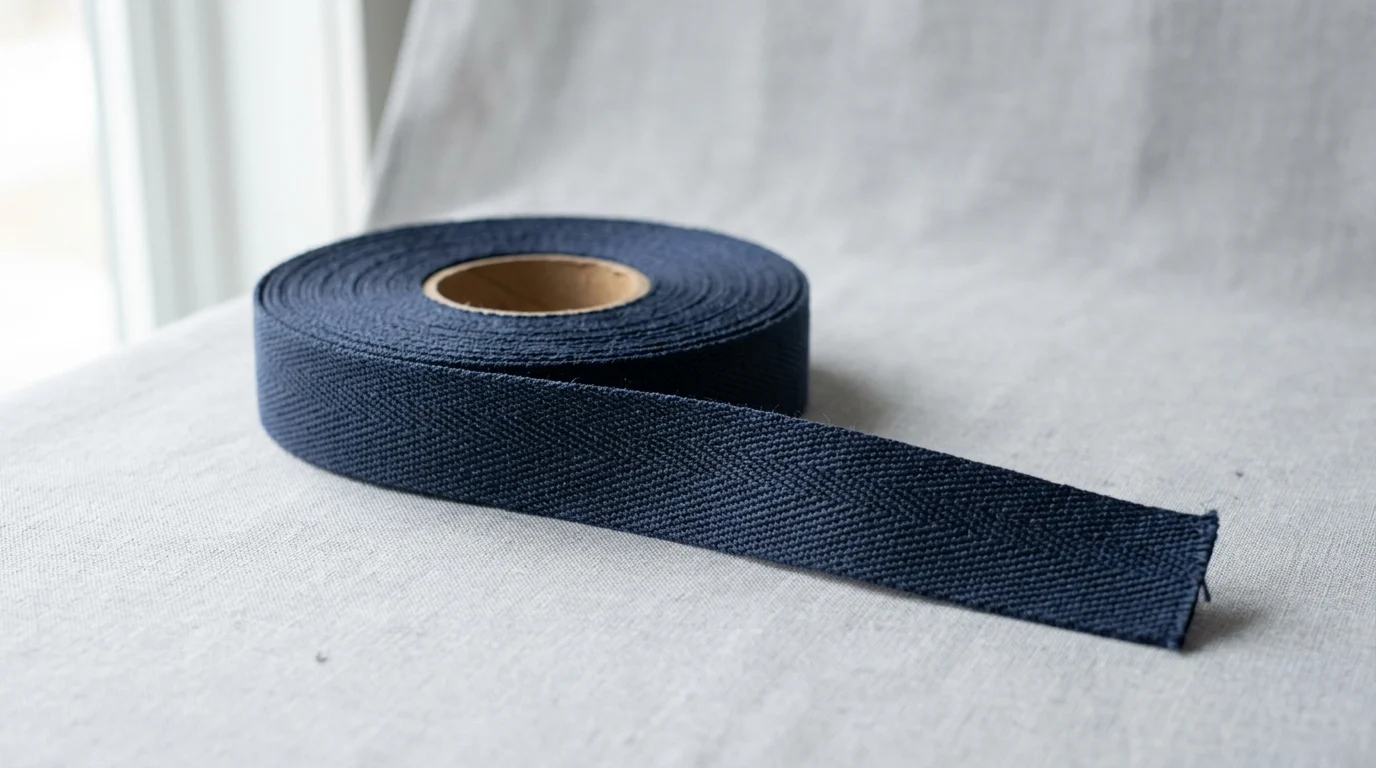
Why Polyester Webbing Tape Matters for Southern Markets
South America presents one of the most demanding climatic environments for safety equipment manufacturers globally. From the relentless humidity of the Amazon basin to the saline-rich air of the Pacific and Atlantic coasts, materials used in critical safety gear face constant degradation threats. Furthermore, high ultraviolet exposure near the equator significantly accelerates the breakdown of synthetic polymers. In these regions, the selection of fundamental structural components dictates the lifecycle, compliance, and reliability of the final protective product.
Key uses in harnesses and load-bearing products
The foundational architecture of fall protection harnesses, heavy-duty cargo tie-downs, and industrial lifting slings relies heavily on the performance of the woven webbing. In critical life-saving applications, dynamic load distribution must remain consistent regardless of environmental exposure. Utilizing high-tenacity POLYESTER WEBBING TAPE has become the industry standard for South American operations, rapidly displacing traditional materials.
This transition is primarily driven by the material’s dimensional stability under high tension. When an industrial worker experiences a sudden fall event, the harness webbing must absorb and distribute the kinetic energy without catastrophic elongation or snapping. Polyester provides the optimal balance of rigidity and energy dispersion, making it the non-negotiable choice for load-bearing personal protective equipment.
Humidity-related failure risks
High ambient moisture fundamentally alters the mechanical properties of many synthetic fibers. In environments where relative humidity consistently exceeds 80%, hydrophilic materials like nylon can absorb up to 8% to 9% of their weight in water. This absorption acts as a plasticizer, causing legacy webbing to lose between 10% and 15% of its tensile strength when wet.
Conversely, polyester is highly hydrophobic, featuring a moisture absorption rate of less than 0.4%. This near-zero absorption prevents the webbing from swelling, losing structural integrity, or becoming an incubation medium for mold and mildew. By mitigating these humidity-related failure risks, manufacturers ensure that safety gear retains its certified load-bearing capacity even during prolonged exposure to tropical monsoons and damp mining environments.
Core Specifications and Testing Requirements
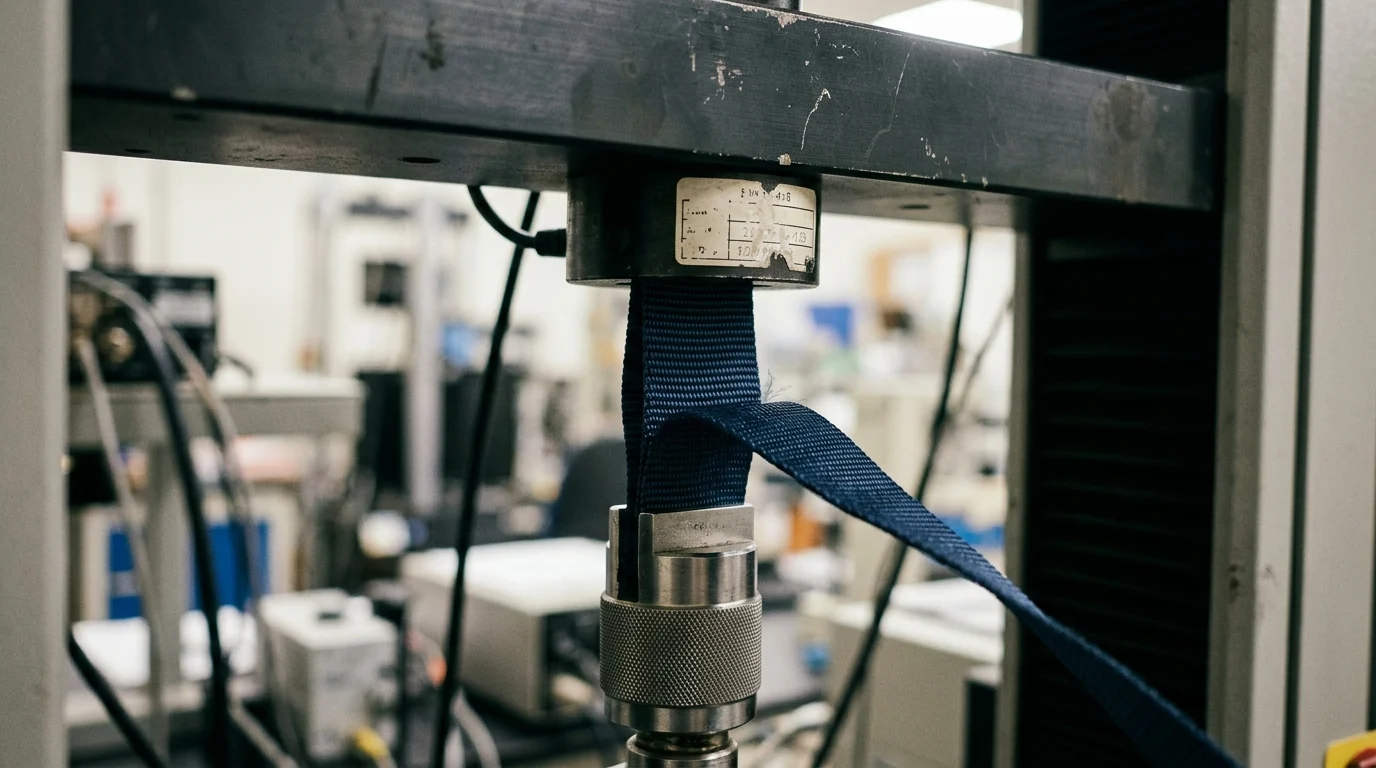
Validating the performance of safety webbing requires rigorous testing protocols that mirror the harsh realities of South American industrial sites. As countries like Brazil, Chile, and Colombia adopt stricter occupational safety frameworks, procurement and engineering teams must ensure that components meet strict international standards, such as ANSI Z359 or EN 361, while factoring in the accelerated weathering inherent to equatorial zones.
Tensile strength, elongation, and abrasion resistance
The triad of tensile strength, elongation, and abrasion resistance forms the core of webbing specification. For standard 1-inch (25.4mm) fall protection webbing, regulatory compliance typically mandates a minimum breaking strength of 5,000 lbs (22.2 kN). Furthermore, elongation at rupture must be strictly controlled; excessive stretch can result in a worker striking a lower level during a fall.
| Property | Polyester Webbing | Nylon Webbing | Impact on Safety Gear |
|---|---|---|---|
| Tensile Strength (Wet) | Retains ~100% | Loses 10-15% | Critical for high-humidity load bearing |
| Elongation at Break | 5% – 10% | 15% – 25% | Lower elongation prevents ground strikes |
| Moisture Absorption | < 0.4% | 8.0% – 9.0% | Prevents swelling and mold growth |
| Abrasion Resistance | High (Dry & Wet) | High (Dry) / Lower (Wet) | Extends lifespan in rugged terrain |
In addition to tensile metrics, abrasion resistance is evaluated using Taber or Hex Bar testing. Premium webbing must survive upward of 5,000 friction cycles with minimal structural degradation, ensuring longevity when dragged against rough concrete or sharp steel edges on construction sites.
Stitching performance validation
The structural integrity of a safety harness is only as robust as its weakest stitch pattern. When integrating webbing into finished goods, the stitching performance must be validated through shear and peel testing. Thread selection is paramount; utilizing high-tenacity polyester thread ensures that the stitching expands and contracts at the exact same rate as the webbing under thermal and mechanical stress.
Industry testing requires stitched joints to withstand static loads of 22 kN without unravelling or catastrophic thread fracture. Specialized computerized bartack patterns are subjected to dynamic drop tests using 100 kg steel torso dummies to verify that the fall energy is safely dissipated across the sewn intersections rather than tearing the base webbing material.
How Procurement Teams Should Source Polyester Webbing Tape
Sourcing reliable materials for South American manufacturing facilities involves navigating complex logistical networks and stringent quality assurance hurdles. Procurement teams must balance the total cost of ownership against the uncompromising quality required for life safety equipment, ensuring that supply chains remain uninterrupted despite global shipping fluctuations.
Supplier qualification steps
Establishing a resilient supply chain begins with meticulous supplier qualification. Buyers should mandate comprehensive documentation, including ISO 9001 certification and recent third-party laboratory reports from recognized entities like SGS or Intertek. Audits must specifically scrutinize the supplier’s UV aging and moisture resistance testing capabilities, such as continuous compliance with ISO 4892-3 for accelerated weathering.
Furthermore, procurement teams should verify the supplier’s lot-to-lot consistency and traceability systems. Ensuring that every batch of webbing can be traced back to the specific masterbatch of polymer resin extruded is a mandatory step. This documentation is crucial for targeted recalls in the rare event of a field failure, protecting both the manufacturer’s liability and the end-user’s safety.
Decision criteria for reliable supply
Beyond technical specifications, commercial decision criteria dictate the viability of a supplier relationship. Lead times are a critical factor; buyers must account for 30 to 45 days of ocean freight transit when importing materials to major South American hubs like the Port of Santos or Callao. Minimum Order Quantities (MOQs) typically range from 3,000 to 5,000 meters for custom dye lots, requiring accurate demand forecasting to prevent inventory stockouts.
Additionally, colorfastness is an essential yet often overlooked criterion. Procurement must insist on a dye fastness rating of Grade 4 or higher to prevent color bleeding during heavy tropical rains.
Further reading:
Key Takeaways
- Specify polyester webbing tape for humid South American sites because its moisture absorption is below 0.4%, helping preserve load-bearing performance.
- Avoid moisture-sensitive materials in tropical PPE because nylon can absorb 8% to 9% water and lose 10% to 15% tensile strength when wet.
- For 1-inch fall protection webbing, verify a minimum breaking strength of 5,000 lbs or 22.2 kN before approving components.
- Require controlled elongation in harness webbing to prevent excessive stretch during a fall and reduce clearance-related injury risks.
- Evaluate tensile strength, elongation, abrasion resistance, UV exposure, and accelerated weathering data when sourcing safety webbing for South America.
Frequently Asked Questions
Why is polyester webbing tape preferred in South America’s humid climates?
Polyester absorbs less than 0.4% moisture, helping it resist swelling, mold, mildew, and strength loss in tropical or coastal environments.
How does polyester webbing compare with nylon when wet?
Nylon can absorb 8% to 9% of its weight in water and may lose 10% to 15% tensile strength, while polyester retains nearly full wet strength.
What breaking strength is typical for fall protection webbing?
Standard 1-inch fall protection webbing commonly requires a minimum breaking strength of 5,000 lbs, or 22.2 kN, depending on the applicable standard.
Which safety gear commonly uses polyester webbing tape?
It is widely used in fall protection harnesses, cargo tie-downs, lifting slings, and other load-bearing safety products.
Why does elongation matter in harness webbing?
Controlled elongation helps distribute fall energy without excessive stretch, reducing the risk that a worker strikes a lower level during a fall.
Post time: Jun-26-2026