
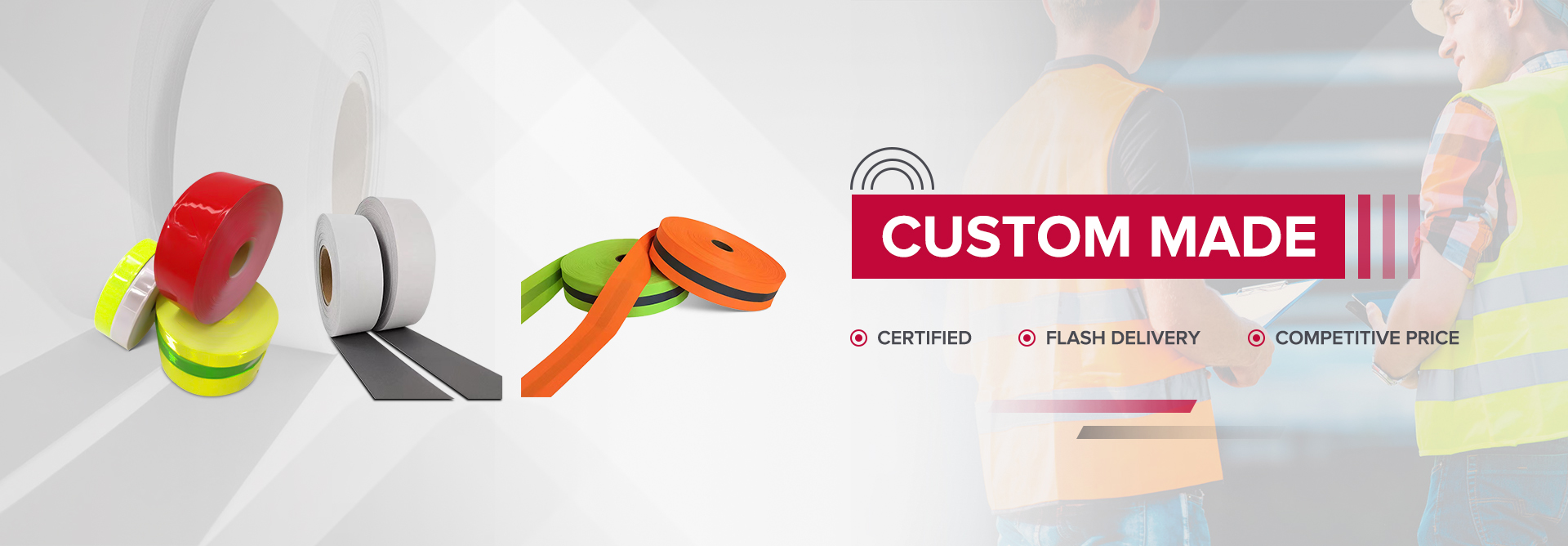
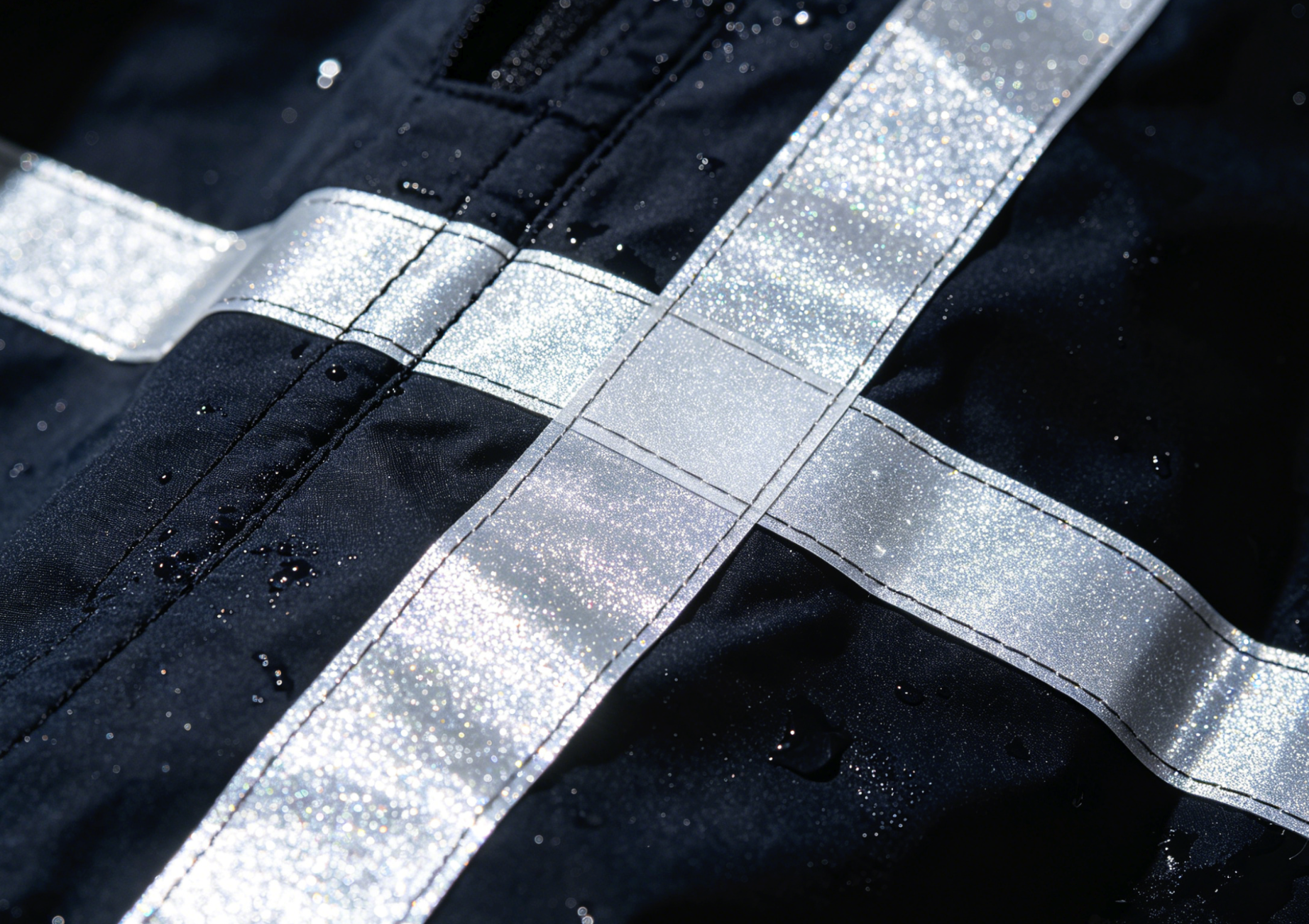
In high-risk industrial and outdoor environments, visibility and durability serve as the primary benchmarks for safety materials. Waterproof reflective tape provides a retroreflective efficiency of over 330 cd/lx/m², maintaining performance under 100% humidity, whereas standard adhesive tape loses structural integrity and visibility when exposed to moisture. Choosing the correct substrate ensures long-term compliance with safety standards such as ANSI/ISEA 107-2020.
Core Performance Metrics: Reflectivity and Durability
The fundamental difference between these two materials lies in the optical construction. Waterproof reflective tape utilizes micro-prismatic technology or glass bead layers to return light to the source. According to a 2026 report by the National Highway Traffic Safety Administration (NHTSA), high-visibility materials reduce nighttime accident rates by approximately 40%. Standard adhesive tapes lack these optical properties, functioning primarily for surface bonding rather than signalization or safety.
| Feature | Waterproof Reflective Tape | Standard Adhesive Tape |
|---|---|---|
| Luminous Intensity | High (300+ cd/lx/m²) | Negligible |
| Water Resistance | IPX8 Rated Substrates | Poor (Delamination common) |
| Service Life | 3 – 7 Years (Outdoor) | 6 – 12 Months (Indoor) |
| Adhesion Strength | High-Tack Acrylic | Variable (Rubber-based) |
Advanced Waterproofing Mechanisms in Safety Reflective Tape
Modern waterproof reflective tape incorporates a multi-layer polymer structure that prevents capillary action. Standard tapes often use porous carriers like paper or thin PVC that absorb water, leading to adhesive failure. In contrast, heavy-duty safety tapes utilize a PET or BOPP top layer that acts as a moisture barrier. Data from the International Organization for Standardization (ISO) indicates that materials passing ISO 9227 salt spray tests maintain 95% of their adhesive bond even after 500 hours of continuous exposure to corrosive elements.
Environmental Resilience of Industrial Reflective Strips
Temperature fluctuations significantly impact tape performance. Standard adhesive tapes often become brittle at 0∘C and lose tackiness at 40∘C. However, high-performance SOLAS reflective tape is engineered to withstand extremes from −40∘C to 70∘C. This thermal stability is crucial for maritime and polar applications where material failure could lead to catastrophic safety lapses. The chemical composition of the adhesive—typically a cross-linked acrylic—ensures the tape remains bonded to metal, plastic, or concrete surfaces regardless of ambient humidity levels.
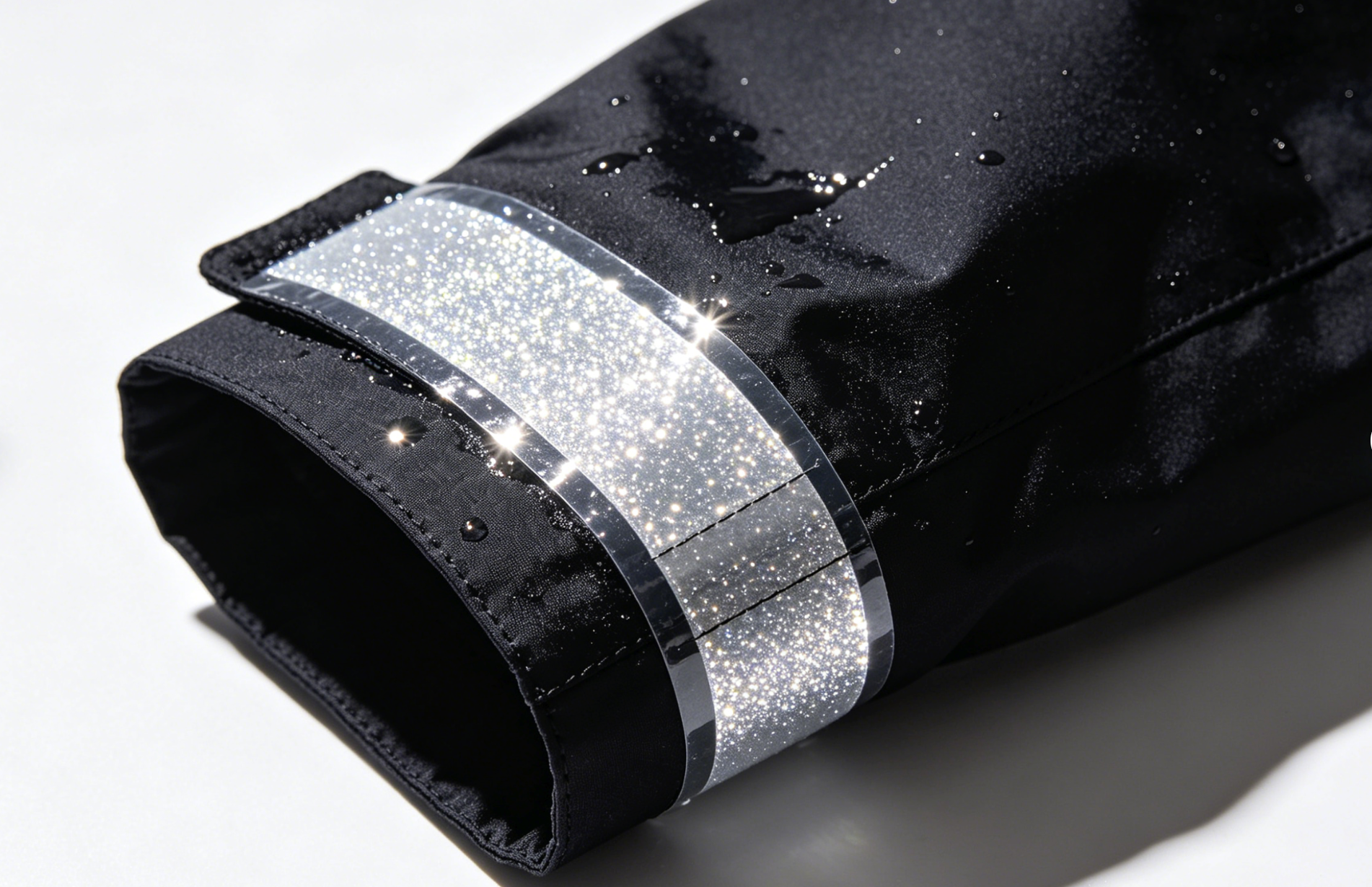
Reflective Brightness vs. Standard Surface Visibility
Visibility distances determine reaction times for operators of heavy machinery. Using reflective tape for trucks, a driver can identify an obstacle from 300 meters away under low-beam conditions. Standard adhesive tape remains invisible until the light source is within 20 meters. This 15-fold increase in detection distance is a direct result of the refractive index of the glass beads used in the tape’s construction, which typically ranges between 1.9 and 2.2.
Comparison of Material Substrates and Longevity
The longevity of safety marking tape depends on its UV resistance. Standard tapes utilize inexpensive pigments that fade when exposed to direct sunlight for more than 90 days. High-quality reflective variants incorporate UV inhibitors within the resin matrix. The ASTM D4956 standard categorizes these materials into types based on their retroreflective performance and expected lifespan, with Type IV and higher providing the necessary durability for permanent outdoor signage and vehicle marking.
| Property | Micro-Prismatic Reflective | Glass Bead Reflective | Standard PVC Tape |
|---|---|---|---|
| Reflex Angle | Wide (Up to 60°) | Narrow (Up to 30°) | N/A |
| UV Resistance | Excellent (7+ Years) | Moderate (3-5 Years) | Low (<1 Year) |
| Thickness | 0.35mm – 0.50mm | 0.15mm – 0.25mm | 0.10mm – 0.15mm |
| Tear Strength | High | Moderate | Low |
Adhesion Strength on Non-Polar Surfaces
The application of conspicuity tape on low-energy surfaces requires a specific adhesive chemistry. Standard tapes usually rely on physical bonding, which fails on oily or textured substrates. Waterproof versions utilize pressure-sensitive adhesives (PSA) that create a chemical bond with the substrate over a 72-hour curing period. This process ensures that the high-intensity reflective tape does not peel at the edges, a phenomenon known as “flagging,” which is common in cheaper standard alternatives.
Cost-Benefit Analysis of Reflective Safety Solutions
While the initial procurement cost of waterproof reflective tape is higher than standard adhesive tape, the total cost of ownership is lower. Frequent replacement of failed standard tape involves labor costs and downtime. Statistical data from industrial maintenance whitepapers suggests that using industrial-grade reflective tape reduces maintenance intervals by 400%. This efficiency makes it the preferred choice for infrastructure projects where long-term reliability is the primary performance indicator.
FAQ: Common Queries Regarding Reflective Tape Performance
How does water immersion affect the retroreflective properties of safety tape?
Waterproof reflective tape is designed with a sealed cell structure. While water on the surface may temporarily refract light differently, the internal reflective elements remain dry. Standard tapes often experience “silvering” or delamination when water penetrates the layers, permanently destroying the material’s ability to reflect light back to the source.
Can waterproof reflective tape be applied to curved or uneven surfaces?
Flexibility depends on the substrate material. Engineering-grade tapes made from acrylic are more rigid and best suited for flat surfaces. However, flexible reflective tape made from vinyl or polyurethane can conform to curves, such as poles or helmets, without cracking or losing adhesion, provided the surface is cleaned with isopropyl alcohol before application.
What is the difference between glass bead and micro-prismatic reflective technologies?
Glass bead technology uses spherical lenses to scatter light, offering a wider angle but lower intensity. Micro-prismatic technology uses man-made prisms to concentrate light, providing significantly higher brightness levels. Prismatic tapes are generally more durable and are the industry standard for highway safety markings due to their superior long-range visibility.
Does temperature affect the initial bond of waterproof adhesive tapes?
Yes, the “wet-out” process of the adhesive is temperature-dependent. Most industrial tapes require an application temperature above $15^\circ\text{C}$ to ensure the adhesive flows into the microscopic valleys of the surface. Once cured, the bond can withstand extreme cold, but applying tape to a frozen surface will result in immediate failure.
Is there a specific cleaning protocol to maintain tape reflectivity?
Reflectivity decreases when dirt or oil accumulates on the surface. To maintain performance, the tape should be cleaned with a mild detergent and water. Avoid high-pressure washers at close range or abrasive brushes, as these can scratch the protective top layer or compromise the edge seals, leading to moisture ingress and reduced lifespan.
Post time: Apr-15-2026