Back to Back Hook and Loop Tape vs Adhesives for Logistics
Why Back-to-Back Hook and Loop Tape Matters in Logistics Procurement

In the modern supply chain, procurement teams are constantly evaluating fastening and bundling solutions to reduce operational bottlenecks, lower total cost of ownership (TCO), and meet sustainability targets. Traditional single-use plastics and chemical adhesives have long dominated the market, but the environmental and financial costs of disposable packaging are driving a significant shift. For B2B wholesale buyers and distributors, sourcing reusable, high-durability fastening materials has become a strategic priority rather than a simple operational preference.
One of the most effective solutions gaining traction is Back to Back Hook and Loop Tape. This material offers a unique combination of high shear strength, reusability, and rapid application without the need for specialized dispensing equipment. By integrating this material into logistics operations, companies can significantly reduce the volume of consumable waste generated in fulfillment centers and transit hubs.
For distributors supplying the logistics sector, understanding the comparative advantages of reusable hook and loop systems against traditional adhesives is critical for capturing market share. Buyers are increasingly demanding fastening products that align with circular economy principles while still delivering robust performance in demanding industrial environments.
Use cases in warehousing, bundling, and returnable packaging
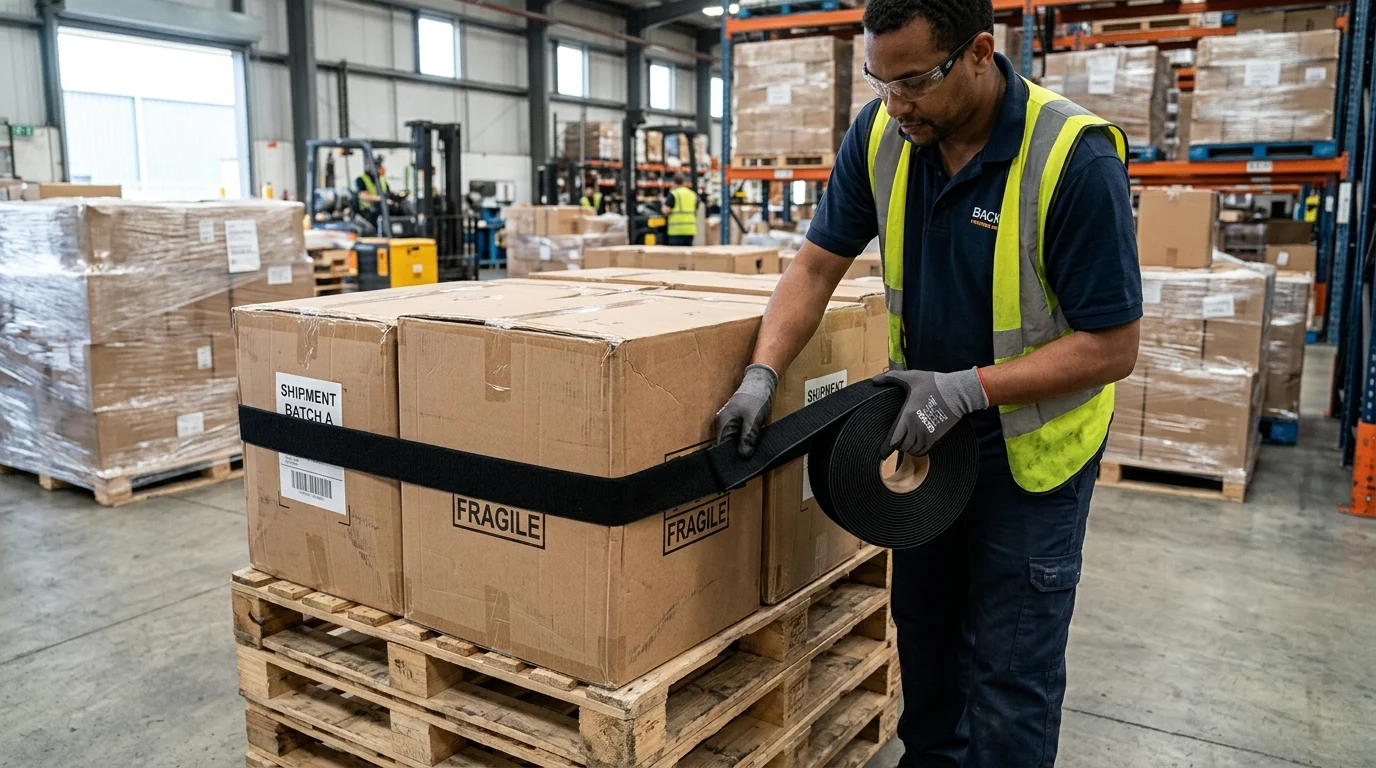
In warehouse environments, back-to-back tapes are predominantly utilized for pallet stabilization, cable management on automated sorting machinery, and securing inventory on standard racking systems. Unlike shrink wrap or adhesive tapes, which must be cut and discarded upon accessing the goods, hook and loop straps allow for partial pallet un-stacking and immediate re-securing. Furthermore, in the growing sector of returnable transit packaging (RTP), these tapes serve as the primary closure mechanism for collapsible crates and reusable heavy-duty logistics bags, ensuring the packaging can survive hundreds of transit cycles.
Cost, labor, and damage reduction drivers
While the initial unit cost per meter of hook and loop tape is higher than standard packaging tape, the ROI is realized through drastic reductions in consumable spend and labor time. Warehouse operators spend fewer seconds applying and removing hook and loop straps compared to wrapping pallets in stretch film. Additionally, the risk of product damage—often caused by utility knives used to slice through adhesive tapes and shrink wrap—is virtually eliminated, leading to lower shrinkage rates and fewer insurance claims.
Demand trends among distributors and industrial buyers
Text-Based Chart: 5-Year Adoption Trend in Reusable Logistics Fasteners
- 2020: 15% adoption in Tier 1 logistics providers
- 2021: 22% adoption (driven by supply chain disruptions and consumable shortages)
- 2022: 35% adoption (driven by new ESG reporting standards)
- 2023: 48% adoption (expansion into mid-market fulfillment centers)
- 2024: 60% projected adoption as RTP systems become standardized
Distributors report a sharp increase in requests for customized, branded hook and loop ties from third-party logistics (3PL) providers. Buyers are moving away from spot purchasing and instead establishing long-term contracts for high-cycle-life fastening materials that support their internal sustainability mandates.
What Back-to-Back Hook and Loop Tape Is
Back-to-back hook and loop tape is an engineered textile fastener constructed by permanently bonding a hook surface to a loop surface, back-to-back, creating a single double-sided roll. This construction allows the tape to wrap around an object and adhere to itself, creating a secure, self-engaging loop without the need for buckles, rings, or secondary adhesives. It is a staple in modern cable management, inventory bundling, and industrial strapping.
The manufacturing process typically involves either ultrasonic welding or a specialized adhesive lamination process to fuse the two distinct layers together. High-quality variants designed for industrial logistics are often extruded as a single piece (such as micro-hook integrated with a low-profile loop) to prevent delamination under heavy shear loads. Wholesale buyers must carefully assess the manufacturing technique, as it directly impacts the product’s lifespan in rugged warehouse environments.
Definition and construction
The construction relies on two primary components: the hook side, which features tiny, rigid protrusions, and the loop side, which consists of a softer, woven or knitted mating surface. When pressed together, the hooks catch the loops, providing strong lateral (shear) resistance while remaining relatively easy to peel apart vertically. Industrial grades often utilize nylon or polyester bases to maximize tensile strength and resistance to UV light and moisture.
Core specifications buyers evaluate
Procurement officers evaluate these tapes based on three primary metrics: peel strength (the force required to pull the layers apart), shear strength (the resistance to sliding parallel forces), and cycle life (the number of times the tape can be fastened and unfastened before losing 50% of its holding power). Standard industrial tapes must typically endure upwards of 5,000 to 10,000 cycles, maintaining consistent performance across broad temperature ranges.
Common product formats and variants
B2B suppliers offer these tapes in several formats to suit different operational workflows. Continuous rolls (often 25m to 50m in length) allow end-users to cut custom lengths on-site. Pre-cut, die-cut cable ties with a slotted head are popular for standardized bundling tasks. Additionally, heavy-duty variants may feature a fire-retardant coating or be woven with metallic threads for specific aerospace or specialized logistics applications.
Back-to-Back Hook and Loop Tape vs Adhesives
The decision between utilizing back-to-back tapes and industrial adhesives is a cornerstone of logistics packaging strategy. Adhesives rely on chemical bonding, creating a permanent or semi-permanent seal that is highly effective for single-use cartons and tamper-evident shipping. However, adhesives leave residue, require specific application temperatures, and generate significant waste upon removal.
Conversely, hook and loop tapes rely on mechanical fastening. They leave absolutely no residue on the bundled products, making them ideal for securing sensitive equipment, painted components, or soft goods. While they do not provide the hermetic seal that some adhesive tapes offer, their reusability makes them vastly superior for internal warehouse movements, work-in-progress (WIP) staging, and closed-loop supply chains.
Cost and performance comparison points
| Feature | Back-to-Back Hook & Loop | Industrial Adhesive Tape |
|---|---|---|
| Upfront Cost | High | Low |
| Lifecycle Cost | Low (Reusable 5,000+ times) | High (Continuous repurchase) |
| Residue / Surface Damage | None | High (Can damage packaging) |
| Application Speed | Fast (Self-engaging) | Moderate (Requires dispensers) |
| Waste Generation | Minimal | High (Single-use plastic waste) |
When adhesives are the better fit
Adhesives remain the superior choice for outbound, single-way shipping where carton sealing and tamper evidence are required. If a package is shipping to an end consumer or a facility outside the company’s closed-loop network, the higher cost of a reusable fastener cannot be recouped, making traditional acrylic or hot-melt adhesive tapes the most economically viable option.
How to run side-by-side trials
Procurement teams should conduct A/B testing in high-volume fulfillment zones. Buyers can isolate a specific workflow, such as pallet stabilization for intra-facility transfers, and measure the total time spent wrapping and unwrapping pallets with stretch film/adhesive versus securing them with hook and loop straps. Tracking consumable spend and labor hours over a 30-day period will clearly illuminate the TCO differences.
Specifications and Sourcing Criteria
When sourcing mechanical fasteners for logistics, buyers must look beyond simple unit pricing and evaluate the technical specifications that guarantee performance under stress. The logistics environment exposes materials to dust, moisture, extreme temperature fluctuations, and rough handling by forklifts and automated conveyors. Sourcing substandard tape can lead to catastrophic load failures and inventory damage.
Furthermore, buyers often consolidate their supplier base by partnering with manufacturers capable of producing a wide range of technical textiles. A supplier that can provide high-grade hook and loop fasteners alongside other safety materials, such as a reflective woven elastic strap, offers greater procurement leverage and simplified supply chain management.
Material and durability requirements
Nylon is the industry standard for high cycle life and strong shear resistance, though it can absorb moisture over time. Polyester variants are preferred for outdoor logistics or damp environments due to their superior UV resistance and hydrophobic properties. Buyers must specify the exact material blend based on their climatic and operational requirements to avoid premature degradation.
Supplier qualification factors
Leading B2B buyers require suppliers to hold ISO 9001 certifications and provide comprehensive batch testing reports. Key qualification factors include the supplier’s lamination process (to ensure the back-to-back layers do not delaminate under tension) and their ability to maintain consistent hook density across massive production runs. Factory audits focusing on quality control infrastructure are highly recommended.
Packaging, palletization, and trade details
For international trade, buyers must calculate freight density carefully. Hook and loop tape is relatively lightweight but voluminous. Suppliers should optimize carton dimensions to maximize container space. Accurate HS code classification (typically falling under woven fabrics or specialized textiles) is crucial to accurately forecast import duties and prevent customs delays.
Compliance and Quality Control
Regulatory compliance in the technical textile and packaging sector is becoming increasingly stringent, particularly for goods entering the European Union and North America. Procurement teams must ensure that their fastening solutions do not contain restricted chemicals that could contaminate the goods they secure or violate regional environmental laws.
Unlike standard packaging that is quickly discarded, reusable logistics materials remain in circulation for years, meaning their chemical stability and physical integrity must be rigorously tested. Quality control processes must move beyond visual inspections to include mechanical stress testing using standardized industry equipment.
Key regulatory and substance requirements
Suppliers must provide documentation proving compliance with REACH (Registration, Evaluation, Authorisation and Restriction of Chemicals) and RoHS (Restriction of Hazardous Substances) directives. This ensures the tapes are free from heavy metals, toxic plasticizers, and harmful azo dyes, which is particularly critical if the logistics operation handles food-grade materials or pharmaceuticals.
Quality tests and inspection checkpoints
Incoming quality control (IQC) should utilize tensiometers to verify peel and shear strength against the manufacturer’s technical data sheet (TDS). Accelerated aging tests in environmental chambers help simulate years of warehouse use, ensuring the hooks do not become brittle and the loop side does not fray excessively after repeated cycling.
Compliance differences vs adhesives
Adhesives face strict scrutiny regarding Volatile Organic Compound (VOC) emissions and solvent residues. Back-to-back tapes, being entirely mechanical fasteners, bypass many of the VOC regulations associated with chemical glues. This makes hook and loop solutions inherently more compliant with indoor air quality standards and green building certifications for modern logistics centers.
How Buyers Should Make the Decision
Transitioning from single-use adhesives to reusable mechanical fasteners requires a strategic procurement framework. Buyers should not view this as a simple commodity swap; rather, it is an infrastructure investment that impacts labor efficiency, waste management, and operational speed. The decision must be rooted in a thorough Total Cost of Ownership (TCO) analysis.
To ensure a successful transition, procurement officers must align with operations managers to identify the specific touchpoints where reusable tapes will generate the highest ROI. This collaborative approach ensures that the chosen specifications meet the practical realities of the warehouse floor.
Application-based selection framework
Buyers should categorize their fastening needs by load weight, transit environment, and cycle frequency. Light-duty bundling (e.g., sorting cables) requires low-profile, easily cut rolls, while securing heavy totes on a pallet demands heavy-duty, ultrasonically welded straps with high shear strength. Matching the spec to the application prevents overpaying for unnecessary durability.
Pilot testing and rollout process
A phased rollout is critical. Implement the back-to-back tape in a single, closed-loop route or a specific warehouse zone first. Gather feedback from the floor staff regarding ease of use and track the reduction in alternative packaging waste. Once the ROI is proven and the optimal tape width and strength are identified, procurement can scale the order volumes.
Channel and resale strategy considerations
For distributors purchasing for resale, offering a tiered product line (standard duty, heavy duty, and specialized environmental grades) allows for deep market penetration. Providing value-added services, such as custom cutting or kitting the tape with other logistics safety gear like a reflective webbing and ribbon, can significantly increase profit margins and customer retention.
Common B2B Buyer Questions
During the sourcing process, importers and wholesale buyers frequently encounter logistical and commercial hurdles related to minimum order quantities, customization, and long-term storage. Addressing these issues early in the supplier negotiation phase ensures a smooth supply chain and predictable inventory management.
Understanding the commercial flexibility of the manufacturer is just as important as the product’s technical specifications. Buyers need partners who can scale production and accommodate specialized branding requirements without causing severe lead time disruptions.
MOQ, custom sizes, and private label options
Manufacturers typically enforce Minimum Order Quantities (MOQs) based on the width and color of the tape, often starting around 10,000 meters for custom colors. However, standard black or white rolls usually have much lower MOQs. Buyers should negotiate private labeling, such as printing company logos on the loop side, to enhance brand visibility and prevent theft in shared logistics networks.
Packaging, storage, and shelf-life planning
Unlike liquid adhesives, hook and loop tapes have an exceptionally long shelf life if stored correctly. They should be kept in a dry, cool environment away from direct sunlight to prevent UV degradation of the nylon base. Buyers should request spool packaging that prevents the edges from crushing during ocean freight, ensuring the tape dispenses smoothly upon arrival.
Import and inventory considerations
Importers must balance bulk purchasing discounts against warehousing costs. Because the material is non-perishable, ordering full container loads (FCL) drastically reduces the landed cost per meter. Buyers should maintain a rolling inventory forecast based on the historical wear-and-tear rates of their RTP systems to prevent stockouts of critical fastening supplies.
Key Takeaways
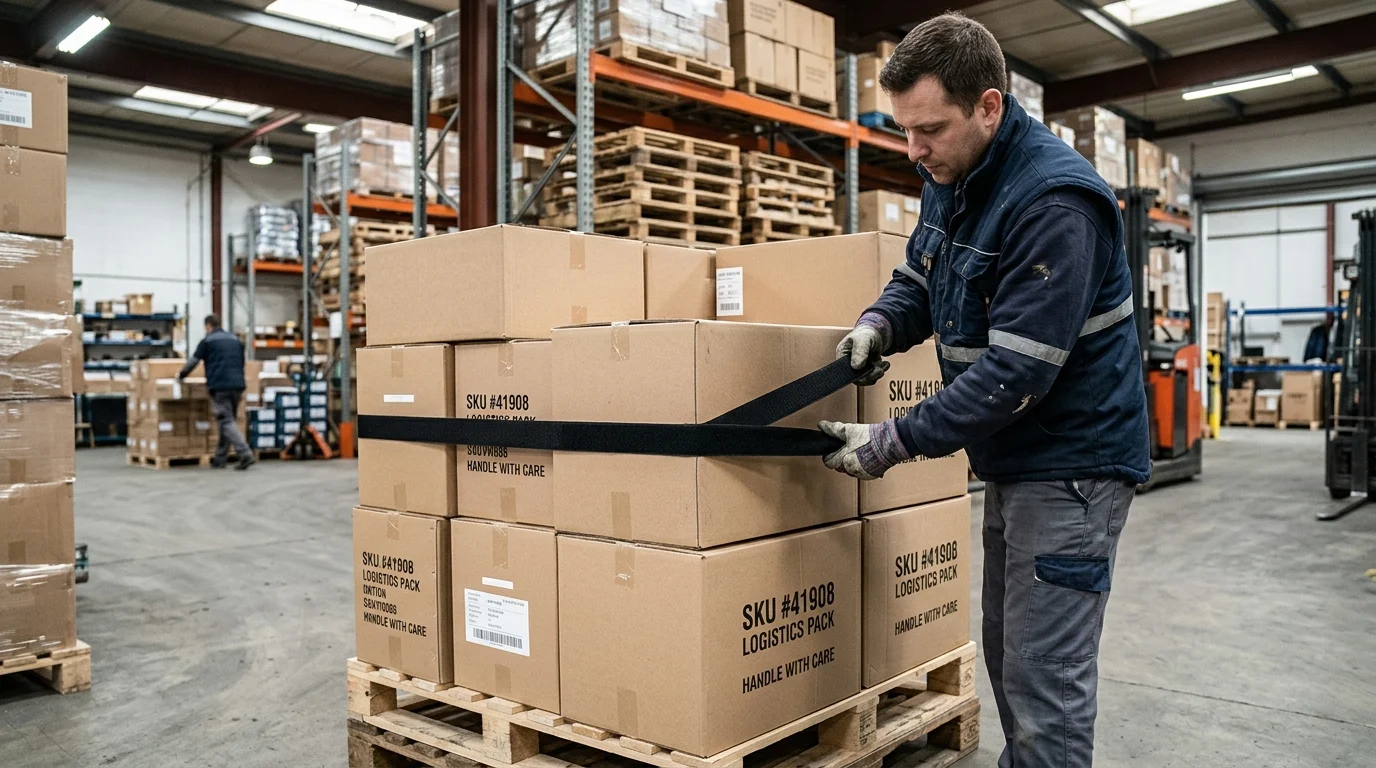
The transition toward reusable logistics packaging is accelerating, and back-to-back hook and loop tape is positioned as a primary enabler of this shift. By replacing single-use adhesives and stretch films in closed-loop environments, companies can achieve substantial reductions in both consumable costs and environmental impact.
For procurement professionals, success lies in understanding the technical nuances of the material, rigorously vetting suppliers, and implementing the solution where it generates the highest operational ROI. Strategic sourcing of these fasteners is a clear pathway to a more resilient and efficient supply chain.
When reusable fastening delivers better value
Reusable tapes offer the best value in internal warehousing, WIP staging, and returnable transit packaging networks where the fastener remains within the company’s control. In these scenarios, the higher initial procurement cost is quickly offset by the elimination of repetitive adhesive tape purchases and the reduction of labor time spent applying and removing single-use materials.
How to balance spec fit, compliance, and landed cost
Buyers must avoid over-specifying. While aerospace-grade fire-retardant tape is impressive, a standard industrial nylon-blend is usually sufficient for standard palletizing, keeping landed costs low. Ensuring REACH and RoHS compliance is non-negotiable, but optimizing container density and negotiating favorable MOQs will keep the total landed cost highly competitive.
Final supplier selection guidance
Select suppliers with a proven track record in technical textiles, verified ISO 9001 certifications, and transparent testing protocols. A reliable partner will provide detailed technical data sheets, accommodate private labeling requests, and offer consistent quality across multiple production runs, ensuring your logistics operations remain secure and efficient year-round.
Related Reading: Back to Back Hook and Loop Tape
Key Takeaways
- Wholesale sourcing and supply-chain implications for Back to Back Hook and Loop Tape
- Specifications, compliance, and commercial terms buyers should validate
- Actionable recommendations for distributors and procurement teams